Are Fiber Optic FC Adaptors Compatible with Other Fiber Optic Connectors?
In the ever - evolving world of fiber optic technology, the question of compatibility between different types of fiber optic connectors is of paramount importance. As a leading supplier of Fiber Optic FC Adaptors, I often encounter customers who are curious about whether these adaptors can work seamlessly with other fiber optic connectors. In this blog post, I will delve into the intricacies of fiber optic connector compatibility, with a specific focus on Fiber Optic FC Adaptors.
Understanding Fiber Optic FC Adaptors
Fiber Optic FC Adaptors are a type of fiber optic connector adaptor that uses a screw - on coupling mechanism. The "FC" stands for "Ferrule Connector" or "Fixed Connector," and it was one of the early connectors developed for fiber optic networks. These adaptors are known for their high precision and stability, making them suitable for applications that require low insertion loss and high return loss.
FC adaptors typically house a ceramic or metal ferrule, which holds the fiber in place with extreme accuracy. This precise alignment is crucial for minimizing signal loss when light travels through the fiber. They are commonly used in telecommunications, data centers, and other high - performance fiber optic systems.
Compatibility with Other Connectors
The compatibility of Fiber Optic FC Adaptors with other fiber optic connectors depends on several factors, including the physical design, the type of fiber, and the mode of operation.
SC Connectors
SC (Subscriber Connector) connectors are another popular type of fiber optic connector. They use a push - pull latching mechanism, which is different from the screw - on mechanism of FC adaptors. However, with the use of hybrid adaptors, it is possible to connect an FC connector to an SC connector. These hybrid adaptors have one end designed for an FC connector and the other for an SC connector, allowing for seamless integration between the two different connector types. This is useful in situations where an existing network uses SC connectors, but new equipment requires FC connectors.
LC Connectors
LC (Lucent Connector) connectors are smaller in size compared to FC connectors and use a push - pull latching mechanism similar to SC connectors. Similar to the case with SC connectors, hybrid adaptors can be used to connect FC and LC connectors. The China Lc Lc Duplex Fiber Optic Adapter [/fiber-optic-adapter/china-lc-lc-duplex-fiber-optic-adapter.html] is an example of a high - quality LC - related adapter that can be part of a system where compatibility with FC adaptors is needed. These hybrid adaptors ensure that the fiber cores are properly aligned, enabling efficient signal transmission between the two different connector types.
ST Connectors
ST (Straight Tip) connectors use a bayonet - style coupling mechanism. While the coupling mechanism is different from that of FC adaptors, hybrid adaptors can bridge the gap between them. The physical design of ST and FC connectors is similar in terms of the ferrule size and the general concept of fiber alignment. This makes it relatively straightforward to create an adaptor that allows for connection between the two. However, it is important to note that the performance of the connection may vary depending on the quality of the adaptor and the installation process.
MTP/MPO Connectors
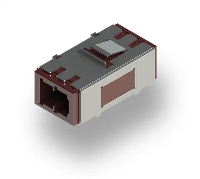
MTP/MPO (Multi - Fiber Push - On) connectors are designed for high - density applications, where multiple fibers are terminated in a single connector. The Optical Fiber Adaptor Mtp / Mpo Adapter [/fiber-optic-adapter/optical-fiber-adaptor-mtp-mpo-adapter.html] is specifically designed for MTP/MPO connections. Connecting FC adaptors to MTP/MPO connectors is more complex and usually requires custom - made adaptors or conversion modules. These conversion solutions need to account for the multiple fibers in the MTP/MPO connector and ensure proper alignment with the single - fiber FC connector.


Factors Affecting Compatibility
Fiber Type
The type of fiber used in the connectors also plays a significant role in compatibility. There are two main types of fiber: single - mode and multi - mode. Single - mode fiber is designed for long - distance transmission, while multi - mode fiber is used for shorter distances. An FC adaptor designed for single - mode fiber may not be compatible with a connector designed for multi - mode fiber, as the core sizes and refractive indices of the two types of fiber are different. It is essential to ensure that the fiber type is consistent across all connectors in a system to achieve optimal performance.
Polishing and End - Face Geometry
The polishing and end - face geometry of the fiber connectors can affect compatibility. Different connectors may have different polishing requirements to achieve low insertion loss and high return loss. For example, some connectors may require a physical contact (PC) polish, while others may need an ultra - physical contact (UPC) or angled physical contact (APC) polish. Incompatible polishing can lead to increased signal loss and reflections, degrading the overall performance of the fiber optic system.
Applications of Compatibility
The ability to connect Fiber Optic FC Adaptors with other connectors has numerous applications in the real world.
Network Upgrades
In many cases, existing fiber optic networks need to be upgraded to accommodate new technologies or increased bandwidth requirements. If the new equipment uses FC connectors, but the existing network uses other connector types, the use of hybrid adaptors allows for a smooth transition without the need to replace the entire network infrastructure.
Equipment Interconnection
In data centers and telecommunications facilities, different types of equipment may use different fiber optic connectors. By using compatible adaptors, it is possible to interconnect various pieces of equipment, such as servers, switches, and routers, regardless of the connector types they are equipped with. This flexibility simplifies the installation and maintenance of the network.
Ensuring Compatibility
As a supplier of Fiber Optic FC Adaptors, I understand the importance of ensuring compatibility. We offer a wide range of hybrid adaptors that are designed to work seamlessly with different fiber optic connectors. Our products are manufactured to the highest quality standards, ensuring proper alignment, low insertion loss, and high return loss.
When customers are looking to connect FC adaptors with other connectors, I always recommend conducting a thorough assessment of the existing network and the new equipment. This includes checking the fiber type, the connector specifications, and the required performance levels. Our technical support team is also available to provide guidance on the selection and installation of the appropriate adaptors.
Conclusion
In conclusion, Fiber Optic FC Adaptors can be compatible with other fiber optic connectors through the use of hybrid adaptors. However, it is essential to consider factors such as physical design, fiber type, and polishing requirements to ensure optimal performance. The ability to connect different connector types offers flexibility in network upgrades and equipment interconnection.
If you are in the market for high - quality Fiber Optic FC Adaptors or need help with connector compatibility, I encourage you to reach out. Our team is ready to assist you in finding the best solutions for your fiber optic needs. Whether you are upgrading an existing network or building a new one, we have the products and expertise to support you. You can also explore our Factory Price Ftth Networking Lc - lc Duplex Fiber Adapter [/fiber-optic-adapter/factory-price-ftth-networking-lc-lc-duplex.html] for cost - effective and reliable fiber optic solutions.
References
- "Fiber Optic Connector Handbook" by John Senior
- "Optical Fiber Communications: Principles and Practice" by Gerd Keiser