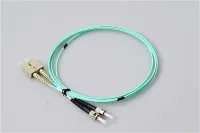
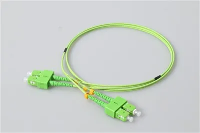
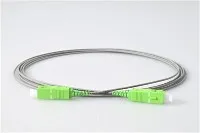
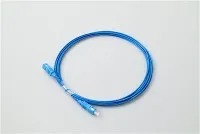
Based on the factors that affect the performance and maintenance of fiber optic patch cords, we can come up with the following six methods to improve the flexibility and reliability of fiber optic patch cord management:
1. Pay attention to the bending radius of the fiber optic jumper. Generally speaking, fiber optic jumpers with diameters of 1.6mm and 3.0mm can withstand a bending radius of no less than 3.5cm, while MPO fiber optic jumpers can withstand a bending radius of no less than 10 times their diameter.
2. Do not pull or squeeze the fiber optic jumper. When installing fiber optic jumpers, excessive force may apply pressure to the fiber optic jumpers and their connectors at both ends, thereby affecting their performance. It is worth noting that if you need to use significant force to pull a fiber optic jumper, there may be some issues in between.
3. Route the fiber optic jumper according to its path. If the existing jumper length matches the current application, it can be reused, but you still need to remove the jumper from the fiber distribution frame and reinstall it along the new path. This is the only way to ensure that jumpers are not tied, bent, or stretched or squeezed. In order to effectively route jumpers, a suitable path should be found between two ports for the jumpers, while avoiding entanglement and overcrowding of the jumpers.
4. Managing fiber optic jumpers by bundling or tying them can make the panel look neat, but tying or tying fiber optic jumpers too tightly can increase the risk of excessive compression. To avoid this issue, fiber optic jumpers can be appropriately "unbound" to allow them to move freely. Mpo jumper
5. Labeling is a necessary task and one of the important tasks for network system administrators. It is necessary to correctly label any management point (including wiring panels) in the network cabling infrastructure, so that network technicians can accurately identify the starting and ending points of optical cables.
6. Check for physical damage to the fiber optic jumper, including indentation and connector damage caused by sudden bending of the sheath.