What does a fiber optic port look like?**
**Introduction
In today''s increasingly connected world, fiber optic technology has become an integral part of our daily lives. From high-speed internet connectivity to telecommunication networks, fiber optic cables play a crucial role in transmitting vast amounts of data quickly and efficiently. At the heart of this technology lies the fiber optic port, a critical component that enables the seamless transmission of information. In this article, we will explore the appearance and characteristics of a fiber optic port, along with its functionality and importance in modern communication systems.
Understanding Fiber Optic Ports
A fiber optic port, also known as an optical interface or an optical connector, is a physical point of connection between a fiber optic cable and a device. It facilitates the transfer of data by allowing light signals to pass through the cable and the connected equipment. These ports are designed to ensure accurate alignment and efficient transmission of light signals, maintaining the integrity of the data being transmitted.
The Physical Appearance
A fiber optic port typically has a compact and cylindrical shape. It is often made of high-quality materials such as metal or durable plastic to ensure longevity and optimal performance. The port consists of a ferrule, a sleeve, and a connector body. Let''s examine each component in detail:
1. Ferrule: The ferrule is a small cylindrical structure located at the end of the fiber optic cable. It is precision-made and holds the fiber securely in place. The ferrule is usually made of ceramic, metal, or polymer materials and is polished to a high degree of smoothness to minimize losses and reflections.
2. Sleeve: The sleeve, also known as the alignment sleeve, is a cylindrical metal or plastic component that houses the ferrules. It provides support and ensures precise alignment between two connected ports. The sleeve is essential for maintaining the integrity and accuracy of the optical connection.
3. Connector Body: The connector body serves as the outer casing of the port. It protects the internal components from damage and provides stability during connection and disconnection. The connector body may have various designs, shapes, and sizes, depending on the specific application and industry standards.
Types of Fiber Optic Ports
Fiber optic ports come in various types, each designed to meet specific industry requirements. Some commonly used types include:
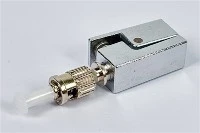
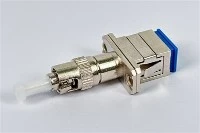
1. ST (Straight Tip): The ST connector has a cylindrical shape with a twist-locking mechanism. It features a metallic bayonet-style coupling that ensures secure connections. ST connectors were widely used in the past but have been largely replaced by smaller and more efficient connectors.
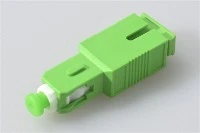
2. SC (Subscriber Connector): The SC connector is a popular choice for both single-mode and multimode fiber applications. It has a square-shaped connector body with a push-pull mechanism, making it easier to insert and remove. SC connectors provide low insertion loss and high precision alignment.
3. LC (Lucent Connector): The LC connector is a small form-factor connector widely used in high-density applications. It features a 1.25mm ferrule and utilizes a push-pull mechanism for easy installation and removal. LC connectors are known for their high reliability and excellent performance.
4. MPO/MTP (Multi-fiber Push-On/Pull-Off): MPO/MTP connectors are used for high-density fiber optic connections. They can accommodate multiple fibers within a single connector, making them suitable for applications requiring high-speed data transmission. MPO/MTP connectors simplify cabling infrastructure and reduce installation time.
Key Characteristics and Functionality
Fiber optic ports possess several key characteristics that make them ideal for high-speed data transmission. Let''s explore some of these characteristics and their overall functionality:
1. Low Signal Loss: Fiber optic ports are designed to minimize signal loss during transmission. The precise alignment of the ferrules within the sleeves ensures efficient light signal transfer with minimal reflections or power loss. This characteristic enables long-distance data transmission without significant degradation.
2. High Bandwidth: Fiber optic ports offer high bandwidth capabilities, allowing for the transmission of large amounts of data in a short period. This makes them suitable for applications such as video streaming, cloud computing, and telecommunication networks that require fast and reliable data transfer.
3. Immunity to Electromagnetic Interference: Unlike traditional copper-based cables, fiber optic cables and ports are immune to electromagnetic interference. This makes them highly reliable in environments prone to electrical noise or interference, such as industrial settings or areas with high radio frequency activity.
4. Long Distances: Fiber optic ports enable data transmission over long distances without significant signal degradation. This characteristic makes them ideal for applications requiring data transfer over hundreds or even thousands of kilometers, such as undersea communication cables.
5. Secure Communication: Fiber optic technology offers a high level of security, as it is difficult to tap into or intercept the transmitted information. Unlike traditional copper cables, fiber optic cables do not emit electromagnetic signals that can be easily intercepted. This makes fiber optic ports a preferred choice for secure data transfer in industries such as finance, defense, and healthcare.
Importance in Modern Communication Systems
Fiber optic ports play a vital role in modern communication systems, enabling faster and more reliable data transmission. These ports are extensively used in various industries and applications, including:
1. Internet Service Providers (ISPs): Fiber optic ports are crucial for ISPs to offer high-speed internet connectivity to residential and commercial customers. These ports enable the transmission of large amounts of data, ensuring fast downloads, smooth streaming, and low latency for enhanced user experiences.
2. Telecommunications: Fiber optic ports form the backbone of telecommunication networks, facilitating the transmission of voice, video, and data signals. They enable high-quality voice calls, high-definition video conferencing, and seamless data transfer for mobile networks and landline connections.
3. Data Centers: Fiber optic ports are extensively utilized in data centers, where reliability and speed are of utmost importance. These ports enable efficient connectivity between servers, storage devices, and networking equipment, ensuring fast data transfer, reduced latency, and improved overall performance.
4. Broadcasting and Video Production: Fiber optic ports are widely used in the broadcasting and video production industry for transmitting high-definition video signals over long distances. They allow for high-quality live streaming, remote production, and efficient transmission of large video files.
5. Medical Imaging: Fiber optic ports play a critical role in medical imaging applications such as endoscopy and minimally invasive surgeries. They enable the transfer of high-resolution images and videos in real-time, providing doctors with a clear view of internal body structures.
Conclusion
In conclusion, fiber optic ports are essential components of modern communication systems. With their compact and durable design, these ports enable high-speed data transmission, ensuring reliable connectivity and efficient communication. By understanding the physical appearance, types, and key characteristics of fiber optic ports, we can appreciate their importance in today''s interconnected world. Whether it is for internet connectivity, telecommunications, data centers, broadcasting, or healthcare, fiber optic ports play a pivotal role in driving efficient and secure communication across various industries.