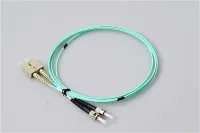
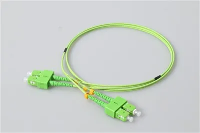
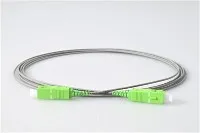
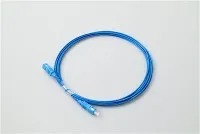
To manage flexible and orderly fiber optic jumpers, it is necessary to understand some factors that affect the performance of fiber optic jumpers. Below are four main factors that affect fiber optic patch cord management.
1. Bending radius
As is well known, the raw material of optical fibers is glass, so they are more fragile than copper wire, and require more attention and protection during operation and management. The reliability and performance of optical fibers are closely related to their bending radius. If the fiber is excessively bent, the optical signal transmitted inside the fiber is easily refracted and overflowed outside the fiber cladding, resulting in a decrease in the intensity of the optical signal. This loss caused by fiber bending is called bending loss. In addition, fiber bending, especially during the installation and pulling of fiber optic jumpers, may also cause micro cracks in the fiber and even permanent damage to the fiber. Generally speaking, there are two types of fiber bending: micro bending and macro bending. The bending radius of macro bending is larger than that of micro bending.
It should be noted that when installing fiber optic jumpers at the beginning, the bending radius of the fiber optic jumpers is not significant because the number of fiber optic jumpers initially routed to the fiber optic distribution frame is very small. However, as more and more new fiber optic jumpers are installed on top of previous fiber optic jumpers, problems caused by bending radius may arise. For example, you may find that a jumper that has been performing well for a long time may experience a sudden increase in attenuation rate or a significant decrease in lifespan.
2. Path of fiber optic jumpers
The path of fiber optic jumpers is closely related to the bending radius, which has a profound impact on the performance and maintenance of jumpers. Therefore, the path of each fiber optic jumper should be clearly defined. If the fiber optic jumper is routed improperly, it may lead to overcrowding of the terminal panel, increasing the risk of excessive bending radius. On the contrary, if fiber optic jumpers are well managed, there will be no problem of excessive bending radius everywhere, and you can quickly and accurately identify a specific fiber optic jumper.
3. Accessibility of Fiber Optic Jumpers
The third factor is the accessibility of installed fiber optic jumpers. If you can easily find the installed fiber optic jumper, the maintenance work of the fiber optic jumper will become much faster, and it will also provide the correct bending radius protection. In the process of network reconfiguration, accessibility plays a crucial role, directly affecting the reliability of the network and the cost of network reconfiguration.
4. Physical protection
The fiber optic jumpers routed between various devices can greatly affect the reliability of the network. Without proper physical protection of the fiber optic jumpers, technical workers and equipment can easily cause damage to the fiber optic jumpers. Therefore, physical protection of installed fiber optic jumpers is crucial.
Strengthening the management of fiber optic jumpers can not only increase the reliability and flexibility of fiber optic network systems, but also reduce the operation and maintenance costs of fiber optic networks. The bending radius of optical fibers, the path of optical fiber jumpers, the accessibility of optical fiber jumpers, and the physical protection of optical fiber jumpers are the main factors that affect the management of optical fiber jumpers. If these four points can be met when managing optical fiber jumpers, then you have already achieved half of the success.