What are the 4 common fiber optic connectors?
Fiber optic connectors play a crucial role in facilitating seamless and efficient communication through fiber optic cables. These connectors enable the transfer of data and signals between various devices and enable the transmission of information at incredible speeds. With the ever-increasing demand for high-speed internet and reliable communication networks, it is important to understand the different types of fiber optic connectors available in the market.
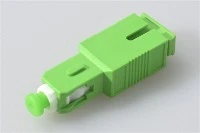
1. SC Connector
The SC (Subscriber Connector) connector is one of the most widely used fiber optic connectors. It features a push-pull latching mechanism that provides easy and quick connections. The SC connector is used extensively in data communication applications, such as local area networks (LANs) and metropolitan area networks (MANs). It is known for its excellent stability and low insertion loss. The SC connector is designed to withstand repeated mating cycles, making it ideal for applications that require regular connections and disconnections.
2. LC Connector
The LC (Lucent Connector) connector is another commonly used fiber optic connector. It is smaller in size compared to the SC connector and provides higher density connections. The LC connector utilizes a latch mechanism similar to the RJ-45 connector used in Ethernet cables. It offers great flexibility and is widely used in high-density applications, such as data centers and enterprise networks. The LC connector is known for its low insertion loss and excellent performance in single-mode and multimode fibers.
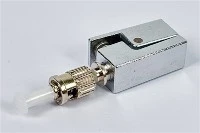
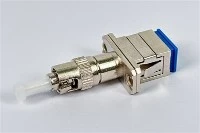
3. ST Connector
The ST (Straight Tip) connector was one of the first types of fiber optic connectors to be widely adopted. It features a bayonet-style coupling mechanism that enables quick and secure connections. The ST connector is commonly used for multimode fiber applications, including local area networks (LANs) and video surveillance systems. It provides good performance in harsh environments and is known for its durability. However, the ST connector is larger in size compared to the SC and LC connectors, limiting its applicability in high-density applications.
4. FC Connector
The FC (Ferrule Connector) connector is primarily used in high-precision single-mode fiber applications. It uses a threaded mechanism to provide a secure and stable connection. The FC connector is often used in telecommunication networks, test equipment, and dense wavelength division multiplexing (DWDM) systems. It offers excellent alignment and repeatability, making it suitable for applications that require high accuracy and reliability. The FC connector is known for its robustness and ability to withstand mechanical stress.
**In summary, the four common fiber optic connectors are SC, LC, ST, and FC connectors. Each connector type has its own unique features and benefits, making them suitable for different applications. The choice of connector depends on factors such as the network architecture, data transmission requirements, and physical constraints. It is important to select the appropriate connector to ensure seamless and reliable communication in fiber optic networks.**