What are the 4 common fiber optic connectors?
Fiber optic connectors are a crucial part of any fiber optic network infrastructure. They are used to connect and disconnect optical fibers quickly and efficiently. There are various types of fiber optic connectors available in the market, but in this article, we will focus on the four most common ones. So, let''s dive into the world of fiber optic connectors and explore their features, applications, and advantages.
1. SC Connector
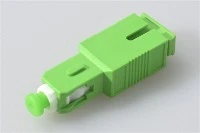
The SC (Subscriber Connector) connector is one of the most popular and widely used fiber optic connectors. It features a square-shaped push-pull mechanism that facilitates easy insertion and removal of the connector. The SC connector has a ceramic ferrule, which ensures accurate alignment of the optic fibers, resulting in low insertion loss and high performance. It is primarily used in single-mode networks due to its excellent stability and low reflection characteristics.
The SC connector is commonly deployed in various applications, such as telecommunication networks, cable TV, data centers, and local area networks (LANs). Its compact size and reliable performance make it a preferred choice for high-speed data transmission, especially in long-distance communication systems.
2. LC Connector
The LC (Lucent Connector) connector is a small form-factor fiber optic connector that has gained immense popularity in recent years. It features a flip latch mechanism, making it easy to insert and remove from the port. The LC connector, like the SC connector, also has a ceramic ferrule, ensuring precise alignment of the fiber cores.
The LC connector''s compact size is one of its key advantages, as it allows for higher packing densities in equipment and panels. It is often used in applications that require high-density interconnections, such as switch-to-switch interfaces and high-density patch panels. The LC connector is suitable for both single-mode and multimode fibers, making it a versatile solution for a wide range of fiber optic applications.
3. ST Connector
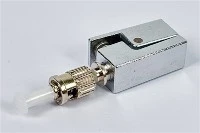
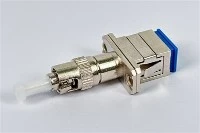
The ST (Straight Tip) connector is one of the older types of fiber optic connectors, but it is still widely used today. It features a bayonet-style twist lock mechanism, which secures the connector in place once inserted. The ST connector has a larger cylindrical ferrule, making it robust and suitable for harsh environments.
This connector is commonly used in multimode fiber optic networks, particularly in local area networks (LANs). It is known for its durability and resistance to vibration, making it an ideal choice for industrial applications and outdoor installations where the connectors may be subjected to rough handling or environmental factors. However, it is important to note that the ST connector has relatively higher insertion loss compared to connectors like SC and LC.
4. MTRJ Connector
The MTRJ (Mechanical Transfer Registered Jack) connector is a popular choice for fiber optic telecommunications and data communications applications. It combines both fiber optic and electrical connections in a single small form-factor connector. The MTRJ connector has two fibers housed in a single ferrule and features a dual-latch design for easy insertion and removal.
This connector is primarily used in duplex multimode fiber optic networks. It is commonly found in enterprise networks, such as office buildings and campuses, where space-saving and high-density solutions are required. The MTRJ connector''s duplex configuration and compact size make it an efficient choice for applications that demand efficient utilization of available space.
In conclusion
Fiber optic connectors play a crucial role in ensuring reliable and efficient communication through optical networks. The four common connectors discussed in this article, namely SC, LC, ST, and MTRJ, cater to different requirements and applications. While the SC and LC connectors are widely used in various network setups, the ST connector offers robustness and durability, whereas the MTRJ connector offers a space-saving duplex solution.
Understanding the features, advantages, and applications of these connectors is essential for anyone working with fiber optic networks. Choosing the right connector for a specific application can make a significant difference in the network''s performance and reliability. So, whether you are building a telecommunications network, setting up a data center, or simply looking to upgrade your existing infrastructure, consider these four common fiber optic connectors to meet your connectivity needs.