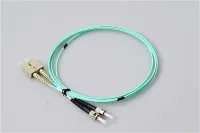
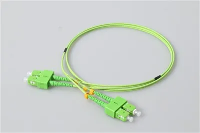
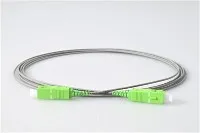
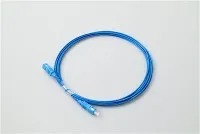
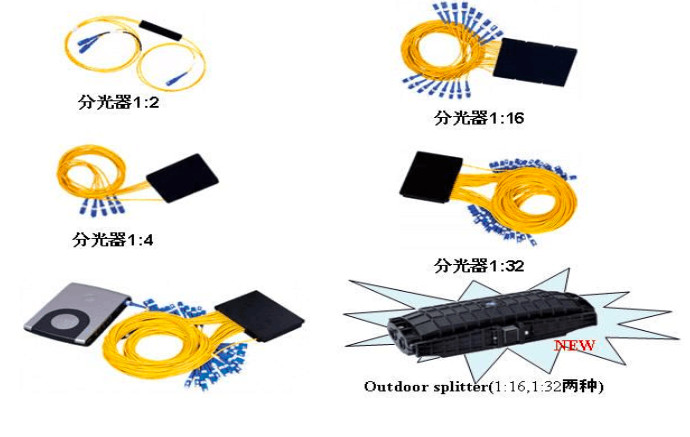
A splitter is a component of building a PON network, which is a passive device connecting OLT and ONU. Its function is to distribute downlink data and concentrate uplink data. The splitter has one uplink optical interface and several downlink optical interfaces. The optical signals coming from the uplink optical interface are allocated to all downlink optical interfaces for transmission, and the optical signals coming from the downlink optical interface are aggregated to a unique uplink optical interface for transmission. When the optical signal is transferred from the uplink optical interface to the downlink optical interface, the optical signal strength/power will decrease, and the same applies when it is transferred from the downlink optical interface to the uplink optical interface. The optical signal intensity from each downlink optical interface can be the same or different
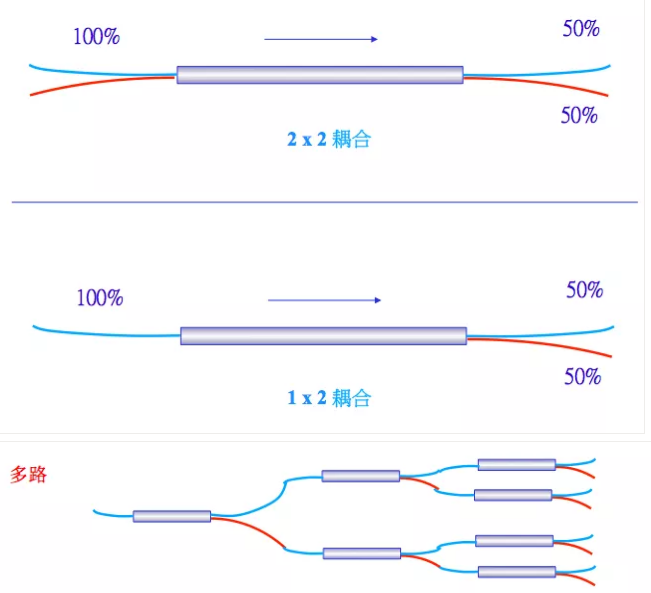
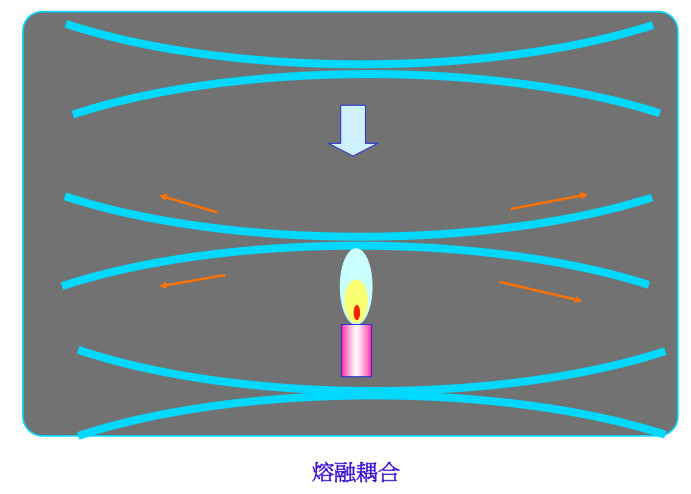
Working principle of a splitter: When conducting light signals in a single-mode optical fiber, the energy of the light is not completely concentrated in the core and propagates. A small amount propagates through the cladding near the core. If the cores of two optical fibers are close enough, the mode field of the light transmitted in one fiber can enter the other fiber, and the light signal is redistributed between the two fibers.
Splitter loss
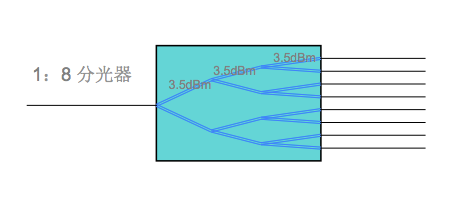
1. The optical power loss is related to the number of optical branches, and each 1:2 splitting produces a loss of 3.5dB;
2. The magnitude of optical power loss determines the distance that can be transmitted;
3. Bandwidth vs. Cost: The average available bandwidth per household depends on the size of the optical division ratio, and the higher the optical division ratio, the lower the cost sharing per household for OLT.
Splitter type
According to different manufacturing processes, splitters are mainly divided into two categories: FBT type (fused cone splitter) and PLC type (planar waveguide power splitter).
Melt stretching technology is the process of bundling two or more optical fibers together and then melting and stretching them on a stretching machine. During the stretching process, the coupling ratio of each fiber is monitored. After the ratio meets the requirements, the melting and stretching process ends. One end retains one fiber (the rest is cut off) as the input end, and the other end serves as the multi-channel output end.
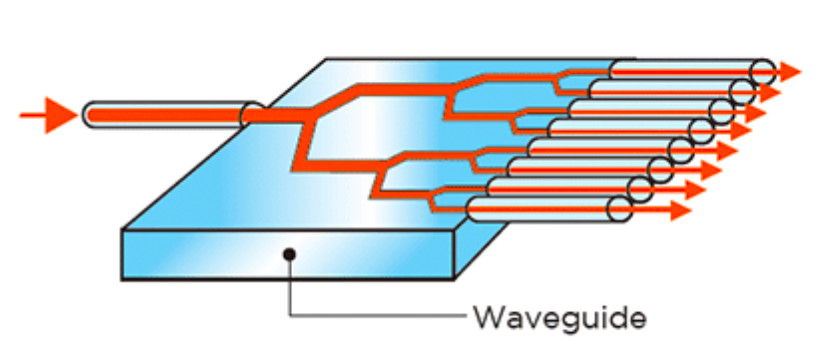
Planar optical waveguide technology is based on optical integration technology, using semiconductor technology to produce optical waveguide branching devices, and the branching function is completed on the chip.
Process principle of PLC type spectrophotometer:
According to the application scope, it can be divided into: box type splitter, tray type splitter, rack type splitter, wall mounted splitter, etc.
Box type splitters are mainly used in ODF racks in computer rooms, optical cable junction boxes, etc