In the realm of long - distance data transmission, fiber optic technology stands as a cornerstone, offering unparalleled speed and reliability. Among the various components, Fiber Optic FC Pigtails play a crucial role. As a supplier of Fiber Optic FC Pigtails, I often encounter a common question from customers: "Which is better, single - mode or multi - mode Fiber Optic FC Pigtails for long - distance transmission?" In this blog, I'll delve into the characteristics of both types, compare their suitability for long - distance transmission, and provide guidance to help you make an informed decision.
Understanding Single - Mode and Multi - Mode Fiber Optic FC Pigtails
Single - Mode Fiber Optic FC Pigtails
Single - mode fiber optic cables have a very small core diameter, typically around 8 - 10 microns. This narrow core allows only one mode (or path) of light to propagate through the fiber. Due to its small core, single - mode fibers have extremely low signal dispersion, which means the light pulses can travel long distances without significant spreading or loss of signal quality.
Single - mode Fiber Optic FC Pigtails are designed to work specifically with single - mode fibers. The FC connector, with its screw - type coupling mechanism, provides a secure and stable connection, ensuring minimal signal loss. These pigtails are commonly used in applications where long - distance and high - bandwidth transmission are required, such as telecommunications networks, long - haul data centers, and submarine cable systems.
Multi - Mode Fiber Optic FC Pigtails
Multi - mode fiber optic cables have a larger core diameter, usually 50 or 62.5 microns. The larger core allows multiple modes (or paths) of light to propagate simultaneously through the fiber. However, this also leads to a phenomenon called modal dispersion, where different modes of light travel at different speeds and arrive at the destination at different times, causing signal distortion over long distances.
Multi - Mode Fiber Optic FC Pigtails are used in conjunction with multi - mode fibers. They are suitable for shorter - distance applications, such as local area networks (LANs), campus networks, and data centers with relatively short cable runs. The FC connector on these pigtails provides a reliable connection for these types of environments.
Comparison for Long - Distance Transmission
Signal Loss
One of the most critical factors in long - distance transmission is signal loss. Single - mode Fiber Optic FC Pigtails have a significant advantage in this regard. Due to the small core and low dispersion, the signal loss in single - mode fibers is much lower compared to multi - mode fibers. Over long distances, multi - mode fibers can experience substantial signal degradation due to modal dispersion, making them less suitable for transmissions over several kilometers.
For example, in a telecommunications network that needs to transmit data over hundreds of kilometers, single - mode Fiber Optic FC Pigtails are the obvious choice. The low signal loss ensures that the data can be transmitted accurately and reliably without the need for frequent signal regeneration.
Bandwidth
Bandwidth refers to the amount of data that can be transmitted over a fiber optic cable in a given time. Single - mode Fiber Optic FC Pigtails offer much higher bandwidth capabilities compared to multi - mode counterparts. The single - mode design allows for the transmission of high - frequency signals with minimal interference, enabling the transfer of large amounts of data at high speeds over long distances.
In modern data - intensive applications, such as cloud computing and high - definition video streaming, the high bandwidth of single - mode Fiber Optic FC Pigtails is essential. Multi - mode fibers, on the other hand, have limited bandwidth due to modal dispersion, which restricts their use in long - distance, high - bandwidth applications.
Cost
Cost is always a consideration in any project. Single - mode Fiber Optic FC Pigtails and the associated single - mode fiber cables are generally more expensive than their multi - mode counterparts. The manufacturing process for single - mode fibers is more complex, and the components require higher precision. Additionally, the equipment needed to transmit and receive signals over single - mode fibers, such as lasers, is also more costly.
However, when considering the long - term cost - effectiveness, single - mode Fiber Optic FC Pigtails may be a better investment for long - distance applications. The lower signal loss and higher bandwidth mean that fewer signal repeaters are needed, reducing the overall cost of the network infrastructure in the long run.
Applications and Use Cases
Single - Mode Fiber Optic FC Pigtails
- Telecommunications: In long - haul telecommunications networks, single - mode Fiber Optic FC Pigtails are used to connect different nodes, such as central offices, cell towers, and data centers. They enable the high - speed transmission of voice, data, and video over long distances.
- Submarine Cables: Submarine cables that span across oceans rely on single - mode fiber optic technology. The low signal loss and high bandwidth of single - mode Fiber Optic FC Pigtails ensure reliable communication between continents.
- Long - Distance Data Centers: Data centers that need to connect to other data centers over long distances use single - mode Fiber Optic FC Pigtails. This allows for the seamless transfer of large amounts of data between facilities.
Multi - Mode Fiber Optic FC Pigtails
- Local Area Networks (LANs): In office buildings, schools, and campuses, multi - Mode Fiber Optic FC Pigtails are commonly used to connect servers, switches, and other network devices. The shorter cable runs in these environments make multi - mode fibers a cost - effective solution.
- Data Center Interconnects (Short - Range): For data centers with multiple racks or buildings in close proximity, multi - mode Fiber Optic FC Pigtails can provide a reliable and cost - efficient way to connect different parts of the data center.
Making the Right Choice
When deciding between single - mode and multi - mode Fiber Optic FC Pigtails for long - distance transmission, several factors need to be considered:

- Distance: If the transmission distance is more than a few kilometers, single - mode Fiber Optic FC Pigtails are the better choice. For shorter distances (less than 1 - 2 kilometers), multi - mode fibers may be sufficient.
- Bandwidth Requirements: High - bandwidth applications, such as 4K video streaming, large - scale data transfer, and high - frequency trading, require the high bandwidth capabilities of single - mode Fiber Optic FC Pigtails.
- Budget: If budget is a major constraint and the distance is short, multi - mode Fiber Optic FC Pigtails may be a more economical option. However, for long - term projects with a large investment, the cost - effectiveness of single - mode fibers should be taken into account.
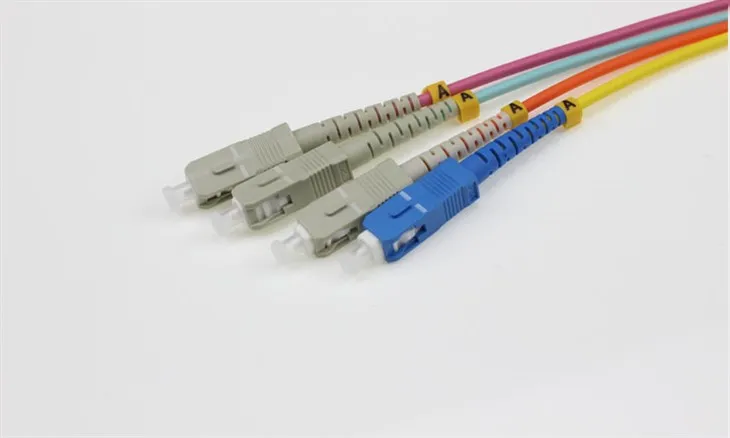
As a supplier of Fiber Optic FC Pigtails, we offer a wide range of both single - mode and multi - mode options to meet your specific needs. If you're also interested in other types of fiber optic pigtails, you can check out our Fiber Optic SC Pigtail and Fiber Optic ST Pigtails. Our Fiber optic FC pigtail products are of high quality, ensuring reliable performance in your network.
If you're still unsure which type of Fiber Optic FC Pigtail is best for your long - distance transmission project, our team of experts is here to help. We can provide detailed technical advice and product recommendations based on your specific requirements. Contact us today to start the procurement process and take your network to the next level.
References
- "Fiber Optic Communication Systems" by Govind P. Agrawal
- "Optical Fiber Technology: Principles and Applications" by John M. Senior