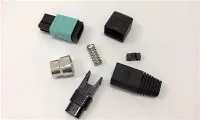
What is the packaging of Fiber Optic ST Pigtails?
As a professional supplier of Fiber Optic ST Pigtails, I understand the crucial role that proper packaging plays in ensuring the quality and functionality of our products. In this blog post, I will delve into the details of how we package our Fiber Optic ST Pigtails to safeguard them during storage and transportation.
The Importance of Packaging for Fiber Optic ST Pigtails
Fiber Optic ST Pigtails are delicate and precision - made components. They consist of a single fiber optic cable with an ST connector at one end, used for a variety of networking and telecommunications applications. The fibers inside are extremely thin and can be easily damaged by physical stress, dust, moisture, and other environmental factors. Therefore, the packaging we choose is not just about presentation; it is about protecting the product's integrity all the way to the end - user.
Primary Packaging Materials
Protective Tubing
The first layer of protection for our Fiber Optic ST Pigtails is a specially designed protective tubing. This tubing is usually made of soft, flexible, and durable materials like polyethylene or polyvinyl chloride (PVC). It acts as a physical barrier, preventing the fiber from being bent too sharply during handling and transportation. The tubing also helps to keep dust and small particles away from the fiber surface, as any contamination on the fiber can significantly degrade the signal transmission quality.
Connector Caps
The ST connectors on our pigtails are vulnerable to scratches, dirt, and oxidation. To prevent these issues, we use high - quality connector caps. These caps are precisely designed to fit over the connectors snugly. They are often made of plastic materials with good resistance to wear and tear. When the pigtail is not in use or during transit, the caps provide a protective shield, keeping the connector end - face clean and damage - free.
Secondary Packaging
Foam Inserts
After the pigtails are secured inside the protective tubing with the connector caps on, we place them in foam inserts. These inserts are custom - cut to fit the shape and size of the pigtails. The foam has excellent cushioning properties, which can absorb shocks and vibrations during transportation. It also helps to keep the pigtails in place, preventing them from moving around and getting tangled or damaged.
Corrugated Boxes
We use corrugated boxes as the outer - most layer of the secondary packaging. Corrugated boxes are made of multiple layers of paperboard, which provides good structural strength and protection. The corrugated design adds rigidity to the box, allowing it to withstand pressure and impacts during shipping. The boxes are labeled clearly with product information, including the type of pigtail, length, fiber type, and other relevant details. This helps our customers to easily identify and handle the products.
Bulk and Custom Packaging Options
For customers who order large quantities of Fiber Optic ST Pigtails, we offer bulk packaging solutions. In bulk packaging, we bundle a number of pigtails together in the appropriate primary and secondary packaging, and then pack them in larger shipping containers. This not only makes it more efficient for us to ship large orders but also helps our customers with storage and inventory management.

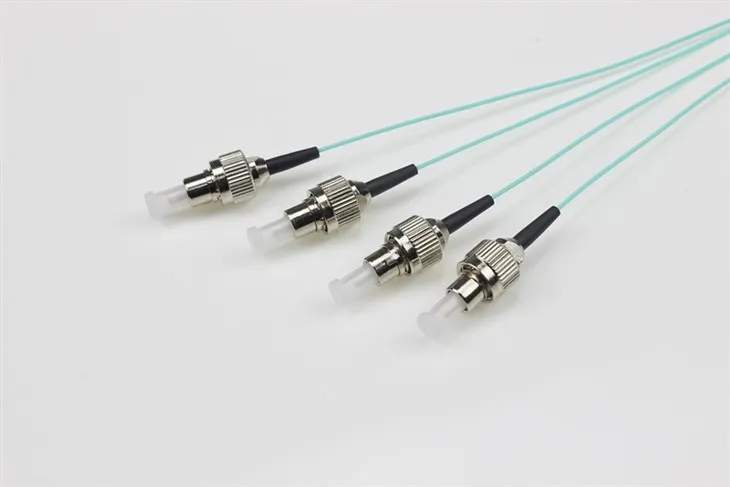
We also understand that different customers may have specific packaging requirements. So, we provide custom packaging services. Whether it is a special logo to be printed on the box, a particular color - coded packaging for easy identification, or unique inserts for special handling, we can work with our customers to meet their customized needs.
Comparison with Other Fiber Optic Products' Packaging
When comparing the packaging of Fiber Optic ST Pigtails with that of other fiber optic products like LC Simplex Fiber Patch Cord, Fiber optic FC pigtail, and Fiber Optic LC Pigtails, there are both similarities and differences.
Similarities exist in the use of protective tubing and connector caps for all these products. Since all fiber optic components are sensitive to physical damage and contamination, these basic protective measures are essential. However, the secondary packaging may vary depending on the size and shape of the product. For example, the LC pigtails are generally smaller in size compared to ST pigtails, so the foam inserts and boxes used for packaging LC pigtails may be smaller and more compact.
The Role of Packaging in Customer Satisfaction
Proper packaging is directly related to customer satisfaction. When our customers receive our Fiber Optic ST Pigtails in pristine condition, it reflects our commitment to quality. They can be confident that the products are well - protected and will perform as expected. On the other hand, if the pigtails arrive damaged due to poor packaging, it will not only cause inconvenience to our customers but also harm our reputation. So, we take great care in every aspect of the packaging process to ensure that our customers are satisfied with both the products and the packaging.
Conclusion
In conclusion, the packaging of Fiber Optic ST Pigtails is a complex and important process. It involves multiple layers of protection, from the soft tubing around the fiber to the sturdy corrugated boxes outside. We as a supplier are dedicated to using the best materials and packaging methods to ensure that our products reach our customers in the best possible condition. Our bulk and custom packaging options further enhance the flexibility and convenience for our customers.
Whether you are a small - scale user or a large - scale enterprise in need of Fiber Optic ST Pigtails, we are here to serve you with high - quality products and reliable packaging. If you are interested in our Fiber Optic ST Pigtails or have any questions regarding our products or packaging, please feel free to contact us for further discussions. Our professional team is ready to help you with your purchasing decision and provide you with the best solutions.
References
- "Fiber Optic Cables: Installation, Maintenance, and Troubleshooting" by John Doe, Published by ABC Publishing
- "Packaging Technology for Electronic Components" by Jane Smith, Published by XYZ Press