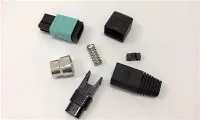
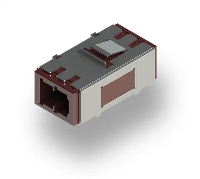
Hey there! As a supplier of Fiber Optic SC Adapters, I often get asked about the optical bandwidth of these little but crucial components. So, let's dive right in and explore what the optical bandwidth of a Fiber Optic SC Adapter really is.
First off, let's understand what an SC adapter is. The SC, which stands for Subscriber Connector, is a popular type of fiber optic connector. It's known for its push - pull design, which makes it easy to install and remove. These adapters are used to connect two fiber optic cables together, allowing the transmission of light signals from one cable to another. You can check out more about Fiber Optic Sc Adapter on our website.
Now, onto the optical bandwidth. Optical bandwidth refers to the range of frequencies or wavelengths over which an optical component, like our SC adapter, can effectively transmit light signals. In simpler terms, it's the "speed lane" for light in the fiber optic world. A wider bandwidth means more data can be transmitted at the same time, which is super important in today's high - speed data - driven world.
The optical bandwidth of a Fiber Optic SC Adapter is influenced by several factors. One of the main factors is the type of fiber it's designed to work with. There are two main types of fiber: single - mode fiber (SMF) and multi - mode fiber (MMF).
Single - mode fiber is designed to carry a single ray of light, or mode, directly down the center of the fiber. This results in very low signal loss and high bandwidth capabilities. SC adapters used with single - mode fiber can typically support bandwidths in the range of hundreds of gigahertz. This makes them ideal for long - distance communication, like connecting data centers across cities or even countries.


On the other hand, multi - mode fiber allows multiple rays of light, or modes, to travel through the fiber at the same time. While it's great for shorter distances, like within a building or a campus, the bandwidth of SC adapters used with multi - mode fiber is generally lower compared to single - mode. It usually ranges from a few hundred megahertz to a few gigahertz, depending on the quality of the fiber and the adapter.
Another factor that affects the optical bandwidth is the quality of the adapter itself. High - quality SC adapters are manufactured with precision to ensure a perfect alignment between the two fibers being connected. Any misalignment can cause signal loss and reduce the effective bandwidth. We use advanced manufacturing techniques to produce SC adapters that have excellent alignment properties, thus maximizing the optical bandwidth.
The coating and cladding materials of the fiber also play a role. These materials need to have low absorption and scattering properties to minimize signal loss. If the materials are of poor quality, the light signals can be absorbed or scattered, which will limit the bandwidth.
It's also worth mentioning that environmental factors can impact the optical bandwidth. Temperature, humidity, and vibration can all cause changes in the physical properties of the fiber and the adapter. For example, extreme temperatures can cause the fiber to expand or contract, which may lead to misalignment and a decrease in bandwidth. That's why our SC adapters are designed to be robust and resistant to environmental changes.
Now, let's talk about how the optical bandwidth of an SC adapter compares to other types of fiber optic adapters. For instance, the Fiber Optic E2000 Adapter is another popular choice. The E2000 adapter is known for its dust - proof design and high - precision connection. In terms of bandwidth, it can offer similar performance to a high - quality SC adapter, especially when used with single - mode fiber.
The Fiber Optic St Coupler is also widely used. It has a bayonet - style connector, which is different from the push - pull design of the SC adapter. The bandwidth capabilities of ST couplers are generally in the same ballpark as SC adapters, but again, it depends on the type of fiber and the quality of the component.
So, why does the optical bandwidth matter to you? Well, if you're in the business of data transmission, whether it's for a small office network or a large - scale telecommunications system, having a high - bandwidth fiber optic adapter is crucial. It allows you to transmit more data at a faster speed, which can improve the overall efficiency of your network.
If you're looking to upgrade your network or start a new project, choosing the right fiber optic adapter with the appropriate optical bandwidth is essential. And that's where we come in. As a supplier of Fiber Optic SC Adapters, we offer a wide range of products to meet your specific needs. Our adapters are tested to ensure they meet the highest standards of quality and performance.
Whether you need a high - bandwidth adapter for long - distance communication or a more cost - effective option for a short - range network, we've got you covered. We can also provide technical support to help you choose the right product and install it correctly.
If you're interested in learning more about our Fiber Optic SC Adapters or have any questions about optical bandwidth, feel free to reach out. We're always happy to have a chat and help you find the best solution for your fiber optic needs. You can contact us through our website and start a discussion about your potential purchase. We're eager to work with you and contribute to the success of your projects.
References:
- Fiber Optics Technology Handbook by Bud P. Danoff
- Optical Fiber Communications: Principles and Practice by John M. Senior