What is the maximum bending stress that Fiber Optic ST Pigtails can withstand?
As a reliable supplier of Fiber Optic ST Pigtails, I often encounter inquiries from customers about the technical specifications of our products, especially the maximum bending stress these pigtails can endure. Understanding this parameter is crucial as it directly impacts the performance and lifespan of the fiber optic components in various applications.
Understanding Fiber Optic ST Pigtails
Before delving into the maximum bending stress, let's briefly review what Fiber Optic ST Pigtails are. These pigtails consist of a short length of fiber optic cable terminated with an ST connector at one end. The ST connector is a bayonet-style connector known for its ease of installation and widespread use in telecommunications, local area networks (LANs), and data centers. Fiber Optic ST Pigtails are used to connect fiber optic cables to network equipment, such as switches, routers, and servers.
The Importance of Bending Stress in Fiber Optics
Bending stress in fiber optic cables occurs when the cable is bent or curved. When a fiber optic cable is bent, the light traveling through the core of the fiber can be refracted or scattered, leading to signal loss. Excessive bending can also cause micro - cracks in the fiber, which can further degrade the signal quality and eventually lead to complete fiber failure. Therefore, understanding the maximum bending stress that a fiber optic pigtail can withstand is essential for ensuring reliable and efficient network operation.
Factors Affecting the Maximum Bending Stress
Several factors influence the maximum bending stress that Fiber Optic ST Pigtails can withstand:
-
Fiber Type: Different types of fiber optic cables, such as single - mode and multi - mode fibers, have different bending characteristics. Single - mode fibers, which are designed for long - distance communication, generally have a smaller core diameter and are more sensitive to bending than multi - mode fibers. Multi - mode fibers, on the other hand, are used for shorter distances and can tolerate a certain degree of bending without significant signal loss.
-
Coating Material: The coating material of the fiber optic cable plays a crucial role in protecting the fiber from bending stress. A high - quality coating can provide mechanical protection and reduce the impact of bending on the fiber. For example, some fibers are coated with a tight - buffered polymer, which provides a cushioning effect and helps to prevent damage from bending.
-
Cable Construction: The overall construction of the fiber optic cable, including the number of fibers, the presence of strength members, and the outer jacket material, can also affect the bending stress tolerance. Cables with additional strength members, such as aramid yarns or steel wires, can better withstand bending forces.
Determining the Maximum Bending Stress
The maximum bending stress of Fiber Optic ST Pigtails is typically specified by the manufacturer in terms of the minimum bend radius. The minimum bend radius is the smallest radius to which the cable can be bent without causing excessive signal loss or damage to the fiber. For example, a common minimum bend radius for single - mode fiber optic cables is 10 times the outer diameter of the cable under normal operating conditions, and 20 times the outer diameter during installation.
To measure the bending stress, manufacturers use a variety of testing methods. One common method is the bend loss test, where the cable is bent around a mandrel of a specific radius, and the amount of signal loss is measured using an optical time - domain reflectometer (OTDR) or a power meter. By varying the bend radius and measuring the corresponding signal loss, the manufacturer can determine the maximum bending stress that the cable can withstand.
Industry Standards for Bending Stress
There are several industry standards that govern the bending stress requirements for fiber optic cables. For example, the Telecommunications Industry Association (TIA) and the International Electrotechnical Commission (IEC) have established standards for fiber optic cable performance, including the maximum allowable bend radius. These standards ensure that fiber optic cables from different manufacturers are compatible and meet the minimum requirements for reliable network operation.
Applications and Bending Stress Considerations
In different applications, the bending stress requirements for Fiber Optic ST Pigtails may vary. In data centers, where space is often limited, cables may need to be bent around tight corners or routed through cable trays. In this case, pigtails with a smaller minimum bend radius are preferred to ensure easy installation and reliable performance.

In outdoor applications, such as in telecommunications networks, cables may be exposed to environmental factors such as wind, ice, and temperature changes. These factors can cause additional stress on the cables, and pigtails with a higher bending stress tolerance are required to ensure long - term reliability.
Comparison with Other Types of Fiber Optic Pigtails
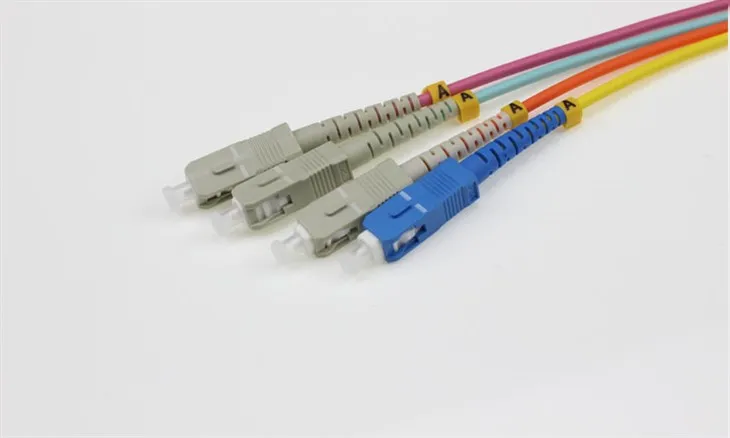
When considering the bending stress of Fiber Optic ST Pigtails, it's also useful to compare them with other types of fiber optic pigtails, such as Fiber Optic Lc Pigtails, Fiber Optic Sc Pigtail, and Fiber Optic Fc Pigtail. Each type of pigtail has its own characteristics in terms of bending stress tolerance.
LC pigtails, for example, are known for their small form factor and are often used in high - density applications. They generally have a similar bending stress tolerance to ST pigtails, but their smaller size may require more careful handling during installation to avoid excessive bending.
SC pigtails are widely used in telecommunications and data center applications. They are relatively easy to install and have a good balance between bending stress tolerance and cost.
FC pigtails, which use a threaded connector, are often used in high - precision applications, such as in laboratory settings. They typically have a higher bending stress tolerance due to their more robust construction.
Ensuring Quality and Performance
As a supplier of Fiber Optic ST Pigtails, we take several steps to ensure the quality and performance of our products. We source high - quality fibers and materials from reputable suppliers and use advanced manufacturing processes to produce pigtails that meet or exceed industry standards.
Our pigtails are subjected to rigorous testing before they are shipped to customers. We perform bend loss tests, insertion loss tests, and return loss tests to ensure that each pigtail meets the specified performance criteria. In addition, we provide detailed technical documentation and support to our customers to help them select the right pigtails for their applications and to ensure proper installation and maintenance.
Contact Us for Your Fiber Optic Needs
If you are in the market for high - quality Fiber Optic ST Pigtails or have any questions about the maximum bending stress or other technical specifications, we encourage you to contact us. Our team of experts is ready to assist you in selecting the right products for your specific requirements. Whether you are building a new network, upgrading an existing one, or need replacement pigtails, we can provide you with reliable and cost - effective solutions.
References
- Telecommunications Industry Association (TIA) standards for fiber optic cables.
- International Electrotechnical Commission (IEC) standards for fiber optic cable performance.
- Manufacturer's technical documentation for Fiber Optic ST Pigtails.