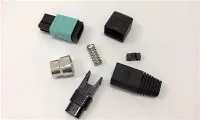
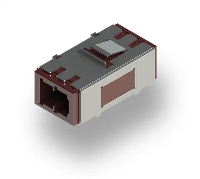
As a seasoned supplier of Fiber Optic PLC Splitters, I often encounter inquiries about the differences between single - mode and multi - mode Fiber Optic PLC Splitters. In this blog post, I'll delve into the technical details, applications, and key distinctions between these two types of splitters to help you make an informed decision for your fiber optic network needs.
Technical Fundamentals
To understand the differences, we first need to grasp the basics of single - mode and multi - mode fibers, which are closely related to the operation of the splitters.
Single - mode Fiber
Single - mode fiber has a very small core diameter, typically around 9 microns. This narrow core allows only one mode (or path) of light to propagate through the fiber. The light travels in a straight line down the center of the core, minimizing dispersion and attenuation. As a result, single - mode fibers can transmit data over extremely long distances with very low loss, making them ideal for long - haul telecommunications networks.
Multi - mode Fiber
Multi - mode fiber, on the other hand, has a larger core diameter, usually 50 or 62.5 microns. This larger core enables multiple modes (or paths) of light to travel through the fiber simultaneously. However, different modes of light travel at different speeds and take different paths, which can lead to modal dispersion. Modal dispersion causes the light pulses to spread out over distance, limiting the transmission distance and bandwidth of multi - mode fibers compared to single - mode fibers.
Operation of Fiber Optic PLC Splitters
Fiber Optic PLC (Planar Lightwave Circuit) Splitters are passive optical components used to split an optical signal into multiple outputs. They are based on planar lightwave circuit technology, which involves fabricating optical waveguides on a silicon substrate.
Single - mode PLC Splitters
Single - mode PLC splitters are designed to work with single - mode fibers. They are optimized for the single - mode propagation characteristics of the fiber, ensuring that the optical signal is split evenly among the output ports with minimal loss. These splitters are commonly used in applications where long - distance transmission and high - bandwidth requirements are crucial, such as in fiber - to - the - home (FTTH) networks, metropolitan area networks (MANs), and long - haul telecommunications links. For example, our 1x64 Plc Fiber Splitter, Steel Tube, Bare Fiber 250µm, Sc Apc, Singlemode is a high - performance single - mode splitter suitable for large - scale FTTH deployments.
Multi - mode PLC Splitters
Multi - mode PLC splitters are designed for use with multi - mode fibers. They take into account the multi - mode propagation characteristics of the fiber, including the effects of modal dispersion. While they can split the optical signal among multiple output ports, their performance is more limited in terms of transmission distance and bandwidth compared to single - mode splitters. Multi - mode PLC splitters are typically used in local area networks (LANs), data centers, and short - distance communication systems where the transmission distances are relatively short. Our 1x32 Plc Fiber Splitter, Steel Tube, Bare Fiber 250µm, Sc Apc, Singlemode can also be used in multi - mode applications with appropriate consideration of the network requirements.
Performance Comparison
Let's compare the performance of single - mode and multi - mode PLC splitters in several key aspects.
Insertion Loss
Insertion loss is a measure of the reduction in optical power as the signal passes through the splitter. Single - mode PLC splitters generally have lower insertion loss compared to multi - mode splitters, especially for higher splitting ratios. This is because single - mode fibers have lower attenuation and dispersion, allowing the signal to be split more efficiently.


Bandwidth
Single - mode PLC splitters offer much higher bandwidth capabilities than multi - mode splitters. The single - mode propagation in the fiber enables the transmission of high - frequency signals over long distances without significant degradation. Multi - mode splitters, due to modal dispersion, have a limited bandwidth, which restricts their use in high - speed applications.
Transmission Distance
As mentioned earlier, single - mode PLC splitters are suitable for long - distance transmission, with some systems capable of transmitting signals over hundreds of kilometers. Multi - mode splitters are limited to shorter distances, typically up to a few kilometers, depending on the fiber type and the data rate.
Applications
The differences in performance between single - mode and multi - mode PLC splitters lead to different application scenarios.
Single - mode PLC Splitter Applications
- Telecommunications Networks: Single - mode splitters are widely used in long - haul and metro - area telecommunications networks to distribute optical signals over large distances.
- FTTH Networks: In fiber - to - the - home deployments, single - mode splitters are used to split the optical signal from the central office to multiple households, providing high - speed internet access.
- Data Centers: For high - performance data centers that require long - distance connectivity between servers and storage systems, single - mode splitters are often the preferred choice.
Multi - mode PLC Splitter Applications
- LANs: Multi - mode splitters are commonly used in local area networks within buildings or campuses, where the transmission distances are relatively short.
- Enterprise Networks: They are suitable for small - to - medium - sized enterprise networks that do not require extremely high - speed or long - distance transmission.
- Short - distance Communication Systems: Such as in industrial automation, security systems, and internal communication within a facility.
Cost Considerations
In general, single - mode fibers and splitters are more expensive than multi - mode counterparts. The manufacturing process for single - mode components is more complex, and the equipment required for single - mode transmission, such as lasers, is also more costly. However, when considering the total cost of ownership, including the cost of installation, maintenance, and future upgrades, single - mode solutions may be more cost - effective in the long run, especially for large - scale networks with high - bandwidth requirements.
Conclusion
In summary, the choice between a single - mode and a multi - mode Fiber Optic PLC Splitter depends on several factors, including the transmission distance, bandwidth requirements, cost, and application scenario. Single - mode splitters offer superior performance in terms of long - distance transmission and high - bandwidth capabilities, while multi - mode splitters are more suitable for short - distance, low - cost applications.
As a supplier of Fiber Optic PLC Splitters, we offer a wide range of products to meet different customer needs. Whether you need a 1x64 Plc Fiber Splitter, Steel Tube, Bare Fiber 250µm, Sc Apc, Singlemode for a large - scale telecommunications network or a 1x16 Plc Fiber Optic Splitter for a local area network, we have the right solution for you.
If you are interested in our products and would like to discuss your specific requirements, please feel free to contact us for procurement and further negotiation. We are committed to providing high - quality products and excellent customer service to help you build a reliable and efficient fiber optic network.
References
- Gerd Keiser, "Optical Fiber Communications," McGraw - Hill, 2013.
- R. Ramaswami, K. N. Sivarajan, and G. Sasaki, "Optical Networks: A Practical Perspective," Morgan Kaufmann, 2018.