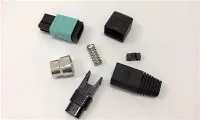
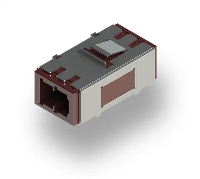
Hey there! As a supplier of Fiber Optic MU Adapters, I'm super excited to chat with you about all the awesome customization options we've got. These nifty little devices are crucial in the world of fiber optic communication, and being able to customize them can really up your game in this high - tech field.
Let's kick things off by briefly talking about what a Fiber Optic MU Adapter is. It's a small but mighty component that allows for the connection and alignment of two fiber optic cables equipped with MU connectors. It's like the bridge that joins two separate fiber highways, making sure data can flow smoothly from one end to the other.
Now, onto the customization options.
1. Housing Material
One of the first things we can customize is the housing material. We offer adapters in different materials, each with its own set of advantages.
-
Plastic Housing: This is a popular choice for many because it's lightweight and cost - effective. It's ideal for indoor applications where there's less risk of physical damage. Plastic adapters are also great for environments where weight is a concern, like in some data centers where you've got a whole bunch of these adapters stacked up. If you're on a tight budget and need a reliable solution for an internal network, plastic - housed Fiber Optic MU Adapters are the way to go. You can check out more about our Fiber Optic Mu Adapter for plastic - based options.
-
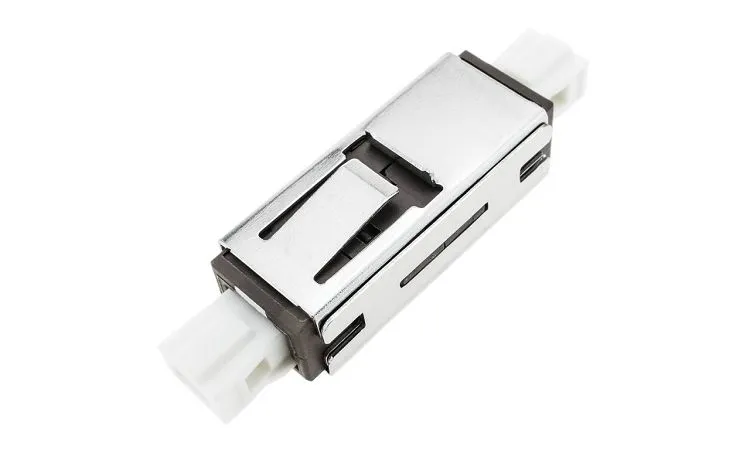
Metal Housing: For more rugged environments, metal housing is the answer. It provides better protection against physical impacts, electromagnetic interference (EMI), and can also withstand higher temperatures. If you're working in an industrial setting, a construction site, or an outdoor installation where the adapter might be exposed to harsh conditions, a metal - housed adapter is definitely what you need.
2. Color Coding
Color coding is another handy customization option. It makes it super easy to identify different types of fiber connections at a glance. You can choose from a variety of standard colors like blue for single - mode fibers, orange for multimode fibers, and yellow for some special applications. This not only helps with installation and maintenance but also reduces the chances of making mistakes when connecting and disconnecting cables. Imagine having a large rack full of adapters; color - coding can save you a ton of time and headaches!
3. Connector Type
We can also customize the type of connectors on the adapter.
-
Single - Mode Connectors: These are designed for long - distance communication. If you're setting up a network that spans across a large campus, a city, or even between different cities, single - mode connectors are essential. They can transmit data over much longer distances with less signal loss compared to multimode connectors.
-
Multimode Connectors: On the flip side, multimode connectors are great for short - distance applications, like within a building or a small office. They're capable of handling high - speed data transmission over relatively short runs, making them a popular choice for local area networks (LANs).
4. Number of Ports
Depending on your specific needs, you can customize the number of ports on the adapter.
-
Dual - Port Adapters: These are commonly used when you need to connect two fiber optic cables side by side. They're versatile and can be used in a wide range of applications, from small - scale networking to some intermediate - sized data centers.
-
Quad - Port Adapters: If you're dealing with a larger amount of data traffic and need to connect multiple cables at once, quad - port adapters are a great option. They're more space - efficient than using multiple dual - port adapters and can help streamline your network setup.

5. Mounting Options
The way you mount the adapter is also customizable.
-
Panel - Mounted Adapters: These are designed to be installed on a panel, such as a patch panel in a data center. They provide a neat and organized way to manage your fiber connections. Panel - mounted adapters are ideal for large - scale installations where you need to keep everything in order.
-
Wall - Mounted Adapters: For smaller - scale installations or in cases where you need to mount the adapter directly on a wall, wall - mounted options are available. They're easy to install and can be a great solution for home offices or small business setups.
6. Polishing Type
The polishing of the ferrules in the adapter can also be customized.
-
Physical Contact (PC) Polishing: This is a standard polishing type that provides a good balance between performance and cost. It's suitable for most general - purpose applications where high - precision is not an absolute requirement.
-
Ultra - Physical Contact (UPC) Polishing: UPC - polished adapters offer a lower insertion loss and better return loss compared to PC - polished ones. They're often used in applications where signal quality is crucial, such as in telecommunications networks.
-
Angled Physical Contact (APC) Polishing: APC - polished adapters have an angled ferrule, which helps reduce back - reflection of light. They're commonly used in applications like fiber - to - the - home (FTTH) and CATV systems.
Now, you might be wondering how these customization options compare with other types of fiber optic adapters. For example, Fiber Optic Mtrj Adapter and Fiber Optic Lc Adapters have their own unique features. MTRJ adapters are known for their small form factor and are often used in high - density applications. LC adapters, on the other hand, are very popular due to their low cost and high performance, especially in data centers. But our Fiber Optic MU Adapters, with all these customization options, can be tailored to meet a wide variety of specific requirements that might not be easily achievable with other adapter types.
In conclusion, whether you're a network engineer, an IT professional, or someone setting up a small home network, the customization options for our Fiber Optic MU Adapters give you the flexibility to create a solution that perfectly fits your needs. If you're interested in learning more about these customization options or are ready to place an order, don't hesitate to reach out. We're here to help you find the best Fiber Optic MU Adapter solution for your project.
References:
- Fiber Optic Technology Handbook
- Industry standards for fiber optic adapters