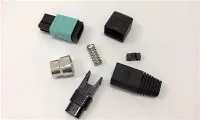
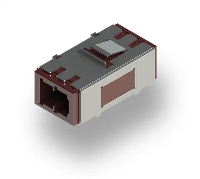
Hey there! As a supplier of Fiber Optic SC Adapters, I've got a ton of hands - on experience with these nifty little devices. Today, I'm gonna share with you how to test the performance of a Fiber Optic SC Adapter.
First off, let's understand what a Fiber Optic SC Adapter is. It's a key component in fiber - optic networks, used to connect two fiber - optic cables together. The SC in its name stands for Subscriber Connector, and it's known for its push - pull latching mechanism, which makes it easy to install and remove.
Why Test the Performance?
Before we dive into the testing methods, you might be wondering why we even need to test these adapters. Well, the performance of a Fiber Optic SC Adapter directly affects the quality of the entire fiber - optic network. A poorly performing adapter can lead to signal loss, which means slower data transmission, and that's a big no - no in today's high - speed digital world.
Visual Inspection
The first step in testing a Fiber Optic SC Adapter is a simple visual inspection. You don't need any fancy equipment for this one. Just take a good look at the adapter. Check for any visible damage like cracks, scratches, or deformities on the body of the adapter. Also, examine the ferrules, which are the small, cylindrical parts at the end of the adapter. They should be clean and smooth. Any dirt, dust, or debris on the ferrules can cause signal loss. If you see any dirt, you can use a fiber - optic cleaning kit to gently clean the ferrules.
Insertion Loss Testing
Insertion loss is one of the most important performance metrics for a Fiber Optic SC Adapter. It measures the amount of light that is lost when the signal passes through the adapter. To test the insertion loss, you'll need a light source and a power meter.
Here's how you do it:
- First, connect the light source to one end of a reference fiber. The reference fiber is a high - quality fiber with known characteristics.
- Then, connect the other end of the reference fiber to the power meter. This will give you a baseline measurement of the light power without the adapter.
- Next, disconnect the reference fiber from the power meter and insert the Fiber Optic SC Adapter between the reference fiber and the power meter.
- Measure the light power again. The difference between the baseline measurement and the new measurement is the insertion loss of the adapter.
The acceptable insertion loss for a Fiber Optic SC Adapter typically ranges from 0.2 dB to 0.5 dB, depending on the application. If the insertion loss is higher than the acceptable range, it could mean that there's a problem with the adapter, like a misaligned ferrule or dirty connectors.
Return Loss Testing
Return loss is another crucial performance parameter. It measures the amount of light that is reflected back from the adapter. High return loss values are desirable because they indicate that less light is being reflected, which means more light is being transmitted through the adapter.
To test the return loss, you'll need an Optical Time - Domain Reflectometer (OTDR). The OTDR sends a short pulse of light into the fiber and measures the amount of light that is reflected back at different points along the fiber.
Here's the testing process:
- Connect the OTDR to one end of a test fiber.
- Insert the Fiber Optic SC Adapter between the test fiber and another fiber.
- Run the OTDR test. The OTDR will display a graph that shows the return loss at the location of the adapter.
A good Fiber Optic SC Adapter should have a return loss of at least 50 dB. If the return loss is lower than this value, it could indicate a problem with the adapter, such as a poor - quality ferrule or improper alignment.
Environmental Testing
Fiber Optic SC Adapters are often used in various environmental conditions, so it's important to test their performance under different temperatures and humidity levels.
For temperature testing, you can use a temperature chamber. Place the adapter inside the chamber and subject it to a range of temperatures, from - 40°C to 85°C. Let the adapter stabilize at each temperature for a certain period of time, and then perform the insertion loss and return loss tests.
Humidity testing can be done in a humidity chamber. Set the humidity level inside the chamber to a high value, such as 95% relative humidity, and let the adapter sit for a few days. Then, check the performance of the adapter again. Any significant changes in the insertion loss or return loss could indicate that the adapter is not suitable for use in high - humidity environments.
Compatibility Testing
Fiber Optic SC Adapters need to be compatible with different types of fibers and other fiber - optic components. To test the compatibility, you can try connecting the adapter to different types of fibers, such as single - mode and multi - mode fibers. You can also test the adapter with other types of fiber - optic connectors, like the Fiber Optic St Coupler, Fiber Optic Fc Adaptor, and Fiber Optic Mpo Adapter. After each connection, perform the insertion loss and return loss tests to make sure that the adapter is working properly with the different components.
Conclusion
Testing the performance of a Fiber Optic SC Adapter is a multi - step process that involves visual inspection, insertion loss testing, return loss testing, environmental testing, and compatibility testing. By following these steps, you can ensure that the adapters you're using or supplying meet the required performance standards.


If you're in the market for high - quality Fiber Optic SC Adapters, we've got you covered. Our adapters are rigorously tested to ensure excellent performance and reliability. Whether you need them for a small - scale network or a large - scale data center, we can provide the right solution for you. If you're interested in learning more or discussing a potential purchase, feel free to reach out and start a conversation with us. We're always happy to help!
References
- "Fiber Optic Test and Measurement Handbook", by Corning Incorporated
- "Optical Fiber Communication Technology", by Gerd Keiser