As a provider of Fiber Optic FC Pigtails, ensuring the signal integrity of these products is of utmost importance. In this blog, I will share some key strategies and considerations to maintain high - quality signal transmission in Fiber Optic FC Pigtails.
Understanding the Basics of Fiber Optic FC Pigtails
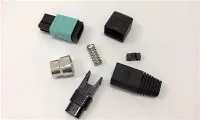
Fiber Optic FC Pigtails are single - fiber cables with an FC connector on one end and a bare fiber on the other. They are widely used in fiber optic communication systems for splicing with other fibers or components. The FC connector, which features a screw - type coupling mechanism, provides a secure connection, but to ensure signal integrity, we need to look into multiple aspects.
Cable Quality and Selection
The quality of the optical fiber cable used in the pigtail is fundamental. High - quality optical fibers have low attenuation, which means less signal loss over a given distance. We should select fibers with a proper core diameter and numerical aperture. For example, single - mode fibers are suitable for long - distance transmission due to their small core diameter (usually 9μm), which allows for a single path of light propagation, minimizing dispersion.
Multi - mode fibers, on the other hand, have a larger core diameter (e.g., 50μm or 62.5μm) and are used for shorter - distance applications. When choosing the fiber type, we must match it with the specific requirements of the communication system.
In addition to the fiber itself, the buffer coating and the outer jacket of the cable also play important roles. A good buffer coating protects the fiber from mechanical stress, while a durable outer jacket shields it from environmental factors such as moisture, temperature changes, and physical damage.
Connector Polishing and Cleaning
The FC connector is a critical part of the pigtail, and its quality greatly affects signal integrity. Proper polishing of the connector end - face is essential. A well - polished end - face ensures a smooth and flat surface for light transmission, reducing reflections and scattering.
There are different polishing grades available, such as PC (Physical Contact), UPC (Ultra - Physical Contact), and APC (Angled Physical Contact). PC connectors have a spherical end - face, which provides good contact between the fibers. UPC connectors have a more precise polish, resulting in lower return loss compared to PC connectors. APC connectors, with an angled end - face (usually 8 degrees), are used in applications where minimizing back - reflection is crucial, such as in some CATV and long - haul networks.
Regular cleaning of the connector is also necessary. Dust, dirt, and oil can accumulate on the end - face, causing significant signal loss. We can use lint - free wipes and cleaning solutions specifically designed for fiber optic connectors. When cleaning, it is important to follow the correct procedure to avoid scratching the end - face.
Installation and Splicing
Proper installation of Fiber Optic FC Pigtails is vital for signal integrity. During installation, we need to ensure that the cables are not bent or twisted beyond their specified bending radius. Excessive bending can cause micro - bends and macro - bends in the fiber, leading to increased attenuation.
Splicing is another important process. There are two main types of splicing: fusion splicing and mechanical splicing. Fusion splicing uses an electric arc to melt and fuse two fibers together, providing a low - loss and permanent connection. Mechanical splicing, on the other hand, aligns the fibers mechanically and uses an index - matching gel to reduce signal loss.
When splicing Fiber Optic FC Pigtails, we need to ensure accurate alignment of the fibers. Any misalignment can result in significant signal loss. It is also important to protect the spliced area with appropriate splice protection sleeves to prevent mechanical stress and environmental damage.
Environmental Considerations
The environment in which Fiber Optic FC Pigtails are used can have a significant impact on signal integrity. Temperature and humidity are two major factors. High temperatures can cause the expansion of the cable materials, which may lead to changes in the fiber's refractive index and increased attenuation. Low temperatures can make the cable more brittle, increasing the risk of breakage.
Humidity can also cause problems. Moisture can penetrate the cable and damage the fiber, especially if the outer jacket is not properly sealed. To mitigate these environmental effects, we can use cables with appropriate environmental ratings. For example, some cables are designed to withstand extreme temperatures and high humidity levels.
In addition, electromagnetic interference (EMI) and radio - frequency interference (RFI) are generally not a concern for fiber optic cables because they use light for signal transmission rather than electrical signals. However, in some cases, if the fiber optic cables are installed in close proximity to high - power electrical equipment, there may be some indirect effects. Therefore, proper routing and shielding should be considered during installation.
Testing and Monitoring
Regular testing and monitoring of Fiber Optic FC Pigtails are essential to ensure signal integrity. We can use optical time - domain reflectometers (OTDRs) to measure the attenuation and identify any faults or breaks in the fiber. OTDRs send a pulse of light into the fiber and measure the back - scattered light to determine the characteristics of the fiber.


Power meters can be used to measure the optical power at the input and output of the pigtail. By comparing the measured power with the expected values, we can detect any signal loss.
In addition to periodic testing, continuous monitoring can also be implemented in some critical applications. This can be done using in - line optical monitors that can detect changes in signal strength and quality in real - time.
Comparison with Other Fiber Optic Pigtails
While Fiber Optic FC Pigtails have their own advantages, it is also useful to compare them with other types of fiber optic pigtails such as [Fiber Optic ST Pigtails](/fiber - optic - pigtail/fiber - optic - st - pigtails.html) and [Fiber Optic LC Pigtails](/fiber - optic - pigtail/fiber - optic - lc - pigtails.html).
Fiber Optic ST Pigtails use a bayonet - style connector, which is easy to install and remove. They are commonly used in LAN applications. However, compared to FC pigtails, ST connectors may have slightly higher insertion loss due to their different coupling mechanism.
Fiber Optic LC Pigtails, on the other hand, feature a small - form - factor connector, which is suitable for high - density applications. LC connectors are known for their low insertion loss and high - performance. They are widely used in data centers and other high - speed communication networks. In some cases, [LC Simplex Fiber Patch Cord](/fiber - optic - pigtail/lc - simplex - fiber - patch - cord.html) can be used as an alternative for specific applications.
Conclusion
Ensuring the signal integrity of Fiber Optic FC Pigtails requires a comprehensive approach that includes cable quality selection, proper connector polishing and cleaning, correct installation and splicing, consideration of environmental factors, and regular testing and monitoring. By following these strategies, we can provide high - quality Fiber Optic FC Pigtails that meet the strict requirements of modern fiber optic communication systems.
If you are interested in our Fiber Optic FC Pigtails or have any questions about signal integrity in fiber optic products, please feel free to contact us for procurement and further discussions. We are committed to providing you with the best solutions for your fiber optic needs.
References
- G. Keiser, "Optical Fiber Communications," McGraw - Hill Education, 2013.
- ITU - T Recommendations on fiber optic standards, International Telecommunication Union.
- Manufacturer's specifications and technical documents for fiber optic cables and connectors.