In the realm of modern telecommunications and data transmission, fiber optic technology has emerged as a cornerstone, offering high - speed, reliable, and long - distance communication capabilities. Among the various components of fiber optic systems, FC adaptors play a crucial role in connecting fiber optic cables. A common question that often arises in the minds of many industry professionals and potential buyers is whether fiber optic FC adaptors are immune to electromagnetic interference (EMI). As a trusted supplier of fiber optic FC adaptors, I am here to delve into this topic and provide a comprehensive analysis.
Understanding Fiber Optic FC Adaptors
Before we explore the relationship between FC adaptors and electromagnetic interference, let's first understand what fiber optic FC adaptors are. FC adaptors, which stand for Ferrule Connector adaptors, are used to join two fiber optic cables together. They feature a threaded coupling mechanism that provides a secure connection, making them suitable for applications where vibration or movement may occur. These adaptors are widely used in various industries, including telecommunications, data centers, and military applications, due to their durability and performance.

How Fiber Optic Technology Works
To understand why fiber optic FC adaptors may or may not be affected by EMI, it's essential to grasp the basic principles of fiber optic technology. Fiber optic cables transmit data in the form of light pulses. The core of the fiber optic cable, usually made of glass or plastic, guides the light through total internal reflection. This means that the light is contained within the core and travels along the length of the cable without significant loss.
Since the data transmission in fiber optic cables is based on light rather than electrical signals, fiber optic systems inherently have an advantage over traditional copper - based systems when it comes to electromagnetic interference. Electrical signals in copper cables can be easily disrupted by external electromagnetic fields, such as those generated by power lines, motors, or radio frequency sources. In contrast, light signals in fiber optic cables are not affected by these electromagnetic fields.
Immunity of Fiber Optic FC Adaptors to EMI
Based on the principles of fiber optic technology, fiber optic FC adaptors are indeed highly immune to electromagnetic interference. The adaptors themselves are designed to connect fiber optic cables and maintain the integrity of the light signal transmission. They do not rely on electrical conductivity for data transfer, so external electromagnetic fields have little to no impact on their performance.

The construction of fiber optic FC adaptors further enhances their immunity to EMI. The ferrules, which are the precision - made components that hold the fiber ends, are typically made of materials such as ceramic or zirconia. These materials are non - conductive and do not interact with electromagnetic fields. The outer housing of the adaptor is also designed to protect the internal components from external interference, ensuring that the light signal can be transmitted smoothly.

Real - World Applications and EMI Resistance
In real - world applications, the immunity of fiber optic FC adaptors to EMI is a significant advantage. For example, in industrial environments where there are numerous sources of electromagnetic interference, such as factories with large motors and electrical equipment, fiber optic FC adaptors can ensure reliable data transmission. In data centers, where high - speed and high - volume data transfer is critical, the use of FC adaptors can prevent signal degradation caused by EMI, thus maintaining the overall performance of the network.
Moreover, in military and aerospace applications, where electromagnetic interference can be a matter of national security, fiber optic FC adaptors are preferred for their high - level immunity to EMI. They can operate in harsh electromagnetic environments without being affected, ensuring the secure and reliable transmission of sensitive information.
Comparison with Other Fiber Optic Adaptors
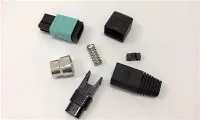
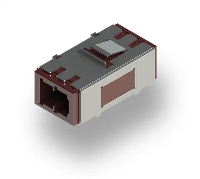
While fiber optic FC adaptors are highly immune to EMI, it's worth comparing them with other types of fiber optic adaptors in the market. For instance, the Fiber Optic MPO Adapter is designed for multi - fiber applications and offers high - density connectivity. Similar to FC adaptors, MPO adaptors are also immune to EMI due to their fiber - based data transmission. However, MPO adaptors are more suitable for applications where a large number of fibers need to be connected simultaneously, such as in data centers with high - capacity requirements.
Another type of adaptor is the Fiber Optic MTRJ Adapter. MTRJ adaptors are small - form - factor adaptors that are often used in local area networks. They also share the same immunity to EMI as FC adaptors but are more compact in size, making them ideal for applications where space is limited.
The China LC LC Duplex Fiber Optic Adapter is a popular choice for duplex fiber connections. Like FC adaptors, LC LC duplex adaptors are immune to EMI and are widely used in telecommunications and data center applications. They offer a cost - effective solution for high - speed data transmission while maintaining excellent EMI resistance.
Limitations and Considerations
Although fiber optic FC adaptors are highly immune to EMI, there are still some limitations and considerations to keep in mind. For example, if the fiber optic cables connected to the FC adaptors are damaged or poorly installed, it can lead to signal loss or degradation. In some cases, external factors such as extreme temperatures, humidity, or physical stress can also affect the performance of the adaptors.
It's also important to note that while the data transmission within the fiber optic system is immune to EMI, the associated electronic equipment, such as transceivers and routers, may still be susceptible to electromagnetic interference. Therefore, proper shielding and grounding of the electronic components are necessary to ensure the overall reliability of the system.
Conclusion
In conclusion, fiber optic FC adaptors are indeed highly immune to electromagnetic interference. Their design, based on fiber optic technology, allows them to transmit data using light signals, which are not affected by external electromagnetic fields. This immunity makes them an ideal choice for a wide range of applications, from industrial settings to military and aerospace applications.
As a supplier of fiber optic FC adaptors, we are committed to providing high - quality products that meet the strictest industry standards. Our FC adaptors are carefully designed and manufactured to ensure optimal performance and reliability, even in the most challenging electromagnetic environments.
If you are in the market for fiber optic FC adaptors or any other fiber optic components, we invite you to contact us for more information. Our team of experts is ready to assist you in finding the right solutions for your specific needs. Whether you have questions about product specifications, installation, or compatibility, we are here to help. Start a conversation with us today and take the first step towards enhancing your fiber optic network.
References
- Ghatak, Ajoy. "Fiber Optics: Principles and Applications." Cambridge University Press, 2010.
- Senior, John M. "Optical Fiber Communications: Principles and Practice." Pearson Education, 2019.
- Stallings, William. "Data and Computer Communications." Pearson, 2018.