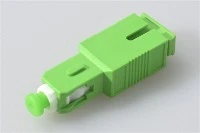
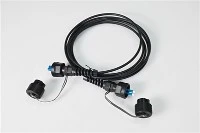
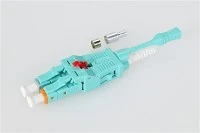
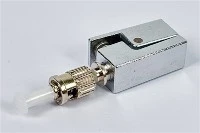
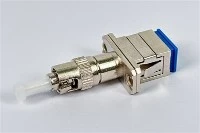
When installing any fiber optic system, it is necessary to consider using low loss methods to connect optical fibers or cables to each other, in order to complete the connection of wide links. The connection of fiber optic links can be divided into two types: permanent and active. Permanent connection is mostly achieved through fusion and bonding methods to form a fixed connector. Mobile connection is usually achieved through flexible connectors, commonly known as fiber optic connectors or flexible joints.
Fiber optic connectors typically use high-precision components (consisting of two pins and a coupling tube consisting of three components) to complete the alignment and connection of optical fibers or cables.
Fiber optic connectors are reusable optical passive devices that connect two optical fibers, perhaps optical cables, to form a continuous optical path. They are widely used in fiber optic transmission lines, fiber optic distribution frames, and fiber optic testing instruments, and are the most widely used optical passive devices nowadays.
The main purpose of fiber optic connectors is to complete the connection of optical fibers. Nowadays, fiber optic connectors widely used in fiber optic communication systems have many types and structures, but the fundamental structure of various connections is common.
The function of fiber optic connectors is primarily optical, but there are also considerations regarding the interchangeability, tensile strength, repeatability, insertion frequency, insertion loss, etc. of fiber optic connectors.