What are the two types of connectors used with fiber optic cables?
Fiber optic cables have revolutionized the way information is transmitted over long distances. These cables use light signals to carry data, resulting in faster and more reliable communication networks. However, to ensure effective transmission, fiber optic cables require specialized connectors. In this article, we will explore the two types of connectors used with fiber optic cables, their features, and their applications.
Types of Fiber Optic Connectors
There are two main types of connectors used with fiber optic cables: ST** (Straight Tip) and **LC (Lucent Connector). Each connector type has its unique characteristics and advantages. Let''s delve deeper into each type to understand their differences and functionalities.
ST Connectors
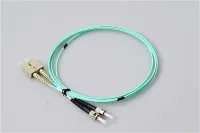
ST connectors were one of the earliest connector types to be widely used in fiber optic networks. The "ST" in its name stands for "Straight Tip." These connectors have a bayonet-style twist lock mechanism for easy and secure connections. ST connectors are commonly used in multimode fiber optic networks and are known for their reliability.
One of the key features of ST connectors is their durability. They can withstand a significant amount of physical stress and are resistant to vibration, making them suitable for harsh environments. Additionally, ST connectors have a ceramic ferrule, which helps maintain the accuracy of fiber alignment, resulting in excellent optical performance.
However, ST connectors have some limitations. They are larger in size compared to other connectors, which can make them less suitable for high-density applications. Moreover, their construction requires the use of alignment sleeves, which can introduce additional insertion losses. Despite these drawbacks, ST connectors continue to be used in various industries, such as telecommunications, military, and industrial sectors.
LC Connectors
LC connectors, also known as Lucent Connectors, emerged as a smaller and more compact alternative to the ST connectors. They gained popularity due to their space-saving design and compatibility with high-density applications. The "LC" designation stands for the "Little Connector" or "Lucent Connector."
LC connectors utilize a push-pull latching mechanism, allowing for easy insertion and removal. This feature makes LC connectors suitable for applications requiring frequent moves, adds, and changes. The smaller size of LC connectors enables higher port density, making them ideal for data centers and telecommunications equipment.
One of the significant advantages of LC connectors is their low insertion loss. The LC ferrule, which holds the fiber, is half the size of an ST connector ferrule. This smaller size minimizes light loss, resulting in improved performance. Furthermore, LC connectors are available in both single-mode and multimode variations, enhancing their versatility.
Due to their compact size and superior performance, LC connectors have become the preferred choice for many networking applications. They are commonly used in fiber optic switches, routers, and patch panels. The telecommunications industry, in particular, extensively utilizes LC connectors in high-density environments.
Comparison
Now that we have explored the features of both ST and LC connectors, let''s summarize their differences and compare their performances.
Size and Density
The size of connectors can significantly impact the overall design and efficiency of a fiber optic system. ST connectors are larger in size compared to LC connectors. As a result, ST connectors are less suitable for high-density applications where space is limited. On the other hand, LC connectors'' compact size allows for higher port density, making them ideal for installations with limited space.
Ease of Use
Ease of use is another crucial factor when choosing fiber optic connectors. ST connectors feature a bayonet-style twist lock mechanism, whereas LC connectors employ a push-pull latching mechanism. Both types of connectors offer simple and quick connection methods, but the specific application requirements and user preferences may influence the choice between them.
Optical Performance
Optical performance plays a vital role in determining the overall efficiency and reliability of a fiber optic network. ST connectors, with their ceramic ferrules, ensure accurate fiber alignment, resulting in excellent optical performance. However, the use of alignment sleeves in ST connectors can introduce additional insertion losses.
LC connectors, with their small-sized ferrules, minimize light loss and offer lower insertion losses compared to ST connectors. This improved optical performance makes LC connectors a preferred choice for high-speed and high-bandwidth applications where signal loss should be minimized.
Compatibility
Both ST and LC connectors are available in single-mode and multimode options, allowing for versatile compatibility. However, due to their smaller size and improved performance, LC connectors are more commonly used in modern fiber optic systems. Nevertheless, the compatibility requirements of the specific system and equipment should be considered when selecting connectors.
Applications and Industries
ST connectors have been widely used in various industries, including telecommunications, military, and industrial sectors. Their durability and ability to withstand physical stresses make them suitable for harsh environments. However, the larger size of ST connectors limits their usefulness in high-density environments.
LC connectors, on the other hand, are the connectors of choice in data centers, telecommunications equipment, and high-density installations. Their small size, low insertion loss, and compatibility with high-speed applications make them highly desirable in these sectors.
Conclusion
Fiber optic cables have revolutionized modern communication networks, enabling faster and more reliable transmission of information. The choice of connectors for fiber optic cables plays a crucial role in ensuring optimal performance and efficiency.
ST and LC connectors are the two primary types of connectors used with fiber optic cables. While ST connectors offer durability and reliability, LC connectors provide compact size and improved optical performance. The specific requirements of the application, including space constraints, compatibility, and performance needs, should be carefully considered when selecting the appropriate connector type.
In conclusion, both ST and LC connectors have their advantages and applications. It is essential to evaluate the specific needs of the fiber optic system and choose the connector that best meets those requirements. With the continued advancements in fiber optic technology, connectors will continue to evolve to meet the demands of high-speed and high-bandwidth communication networks.