What is MDU? (Concept)
MDU stands for Multi-Dwelling Unit. In the telecom and networking industry, this term refers to a building with multiple independent households. Common examples include apartment buildings, student dormitories, hotels, and office buildings.
The terms MDU fiber or MDU fiber optic refer to deploying fiber-to-the-home (FTTH) networks for these multi-household buildings. This is a different deployment method than cabling for detached houses (SDU, Single-Dwelling Unit):
|
Comparison |
SDU |
MDU |
|
User Distribution |
Spread out, one household per structure |
Concentrated, multiple units per building |
|
Cable Usage |
Dedicated cable per household |
Shared backbone, branched drops |
|
Splitting Method |
Typically outdoor |
Tiered splitting inside building |
|
Cabling Complexity |
Simple |
Requires careful planning |
Having grasped the basic concept of what MDU is in telecom, we now have a better understanding of how to deploy a specific MDU fiber installation solution.
What problems can this guide solve for you?
This is a practical fiber MDU project guide. Whether you are a network engineer planning an MDU fiber optic project / a purchasing agent who needs to understand the meaning of MDU in telecom / a property manager who wants to understand what MDU stands for in telecom
Or simply a tech enthusiast who wants to understand the principles of MDU cable cabling, you will find useful MDU project information here.
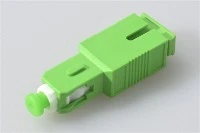
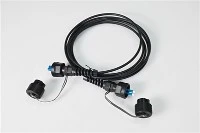
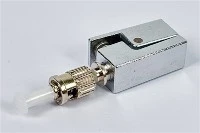
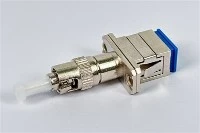
I will use Evolux Fiber products as examples because our product line covers the core equipment for MDU cabling: fiber optic connectors, patch cords, pigtails, PLC splitters, terminal boxes, and adapters-these are precisely the most commonly used passive components in MDU fiber installation.
What strategies should be used for different sizes of MDUs?
Understanding the size of your MDU is essential before we can begin deploying a strategy, as the deployment methods differ. This determines how many splitters, terminal boxes, and fiber optic cabling you need. MDU telecom projects are categorized into three types based on the number of floors and households:
|
MDU Type |
Floors |
Units |
Cabling Strategy |
Recommended Splitting Architecture |
|
Low-Rise MDU |
≤3 floors |
≤12 units |
Centralized, equipment outside building |
Single-stage 1:16 |
|
Mid-Rise MDU |
4-10 floors |
12-128 units |
Distributed, equipment room + floor terminals |
Two-stage 1:8×1:8 |
|
High-Rise MDU |
>10 floors |
>128 units |
Tiered, multiple distribution rooms |
Two-stage 1:16×1:8 |
What is the MDU Fiber network like?
Here's a diagram to help you understand: A complete MDU fiber optic network consists of four zones, extending from the operator's end to the homeowner's end:

The job of MDU fiber installation is to connect these four zones using the appropriate equipment.
What configuration is needed for the main equipment room?
Do you remember the size of your MDU? Then we can start understanding how to configure the corresponding main equipment room. The main equipment room is primarily responsible for external fiber optic termination, main routing, and distribution, impacting the overall network capacity and scalability. I've listed suitable products directly for your reference:
Evolux Fiber Recommended Equipment Configuration
|
Equipment Type |
Specifications |
Application |
Why Choose This |
|
Rack-Mount ODF |
4U, 144/288-core |
Medium-Large MDU (60-200 units) |
High capacity, easy expansion |
|
Slide-Out ODF |
2U, 48/96-core |
Medium MDU (24-60 units) |
Easy operation, good value |
|
Fixed ODF |
2U, 48-core SC/96-core LC |
Small MDU (<24 units) |
Simple structure, low cost |
|
Wall-Mount Fiber Box |
1U/2U, 12/24/48-port |
Space-constrained scenarios |
No floor space required |
ODF (Optical Distribution Frame) is a key piece of equipment in the master equipment room. Evolux's ODF patch panels have several noteworthy features: neat appearance, reasonable wiring, easy to locate, and simple installation-these are especially important for later maintenance.
A specific example from Evolux: Configuration scheme for an 80-unit mid-rise apartment building
If your project is also a 10-story building with 8 units per floor, totaling 80 units, then your main equipment room can be configured as follows:

Equipment list used in the solution:·
- 4U 288-core rack-mount ODF × 1
- 1:8 LGX PLC splitter × 4 (2 in use, 2 on standby)
- SC/APC pigtail 1m × 96
- SC/APC patch cord 2m × 80
- 1U horizontal cable management rack × 3
What is a PLC optical splitter? How is it used in an MDU?
Operators may only provide 1-2 optical fibers (corresponding to 1-2 PON ports) or a limited number of fibers, but we need to connect dozens or even hundreds of households. In this case, an optical splitter is used to solve this problem by "turning one into many." A PLC optical splitter uses the principle of optical waveguides to "uniformly split" a beam of light into multiple beams. For example, a 1:8 splitter has 1 input and 8 outputs, with each output having approximately 1/8 of the original signal strength.
Different application scenarios require the use of splitters with corresponding package types:
|
Package Type |
Size Characteristics |
Where to Install |
When to Use |
|
Bare Fiber |
Smallest |
Requires additional protection |
Custom splicing scenarios |
|
Mini Steel Tube |
3×40mm |
Inside terminal boxes |
First choice for floor splitting |
|
ABS Box |
100×80×10mm |
Standalone installation |
Outdoor or spacious locations |
|
LGX Cassette |
Standard module |
Inside ODF rack |
Main equipment room splitting |
|
Plug-in Card |
Card-sized |
Distribution box slots |
Floor distribution boxes |
Splitting Ratio Reference Table:
|
Split Ratio |
Theoretical Loss |
Actual Loss |
Application |
|
1:2 |
3.0 dB |
3.2-3.8 dB |
Cascade pre-stage |
|
1:4 |
6.0 dB |
6.5-7.2 dB |
Small low-rise MDU |
|
1:8 |
9.0 dB |
9.5-10.5 dB |
Medium MDU, most common |
|
1:16 |
12.0 dB |
12.5-13.5 dB |
Centralized splitting |
|
1:32 |
15.0 dB |
15.5-17.0 dB |
Large MDU primary splitting |
|
1:64 |
18.0 dB |
18.5-20.5 dB |
Ultra-high density scenarios |
Should you choose single-stage or two-stage splitting?
Single-stage splitting involves placing a large splitter (e.g., 1:32) in the basement, directly splitting the fiber to each household into 32 paths. This approach is simple in structure and has fewer splitting points, but the cabling is complex due to the increased number of fiber optic cables.
Two-stage splitting involves placing a 1:8 splitter in the basement, and then another 1:8 splitter on each floor, effectively serving 8 x 8 = 64 households. This method requires fewer fiber optic cables and is more flexible, but the additional splitting stage increases fiber loss by approximately 10dB.

For MDUs with more than 30 households, we recommend two-stage splitting. This is the mainstream approach for MDU fiber installation.
How to choose a terminal box?
The floor wiring area is the "intersection point" of vertical backbone optical cables and horizontal drop cables-the optical cables in the riser "land" here, and then branch into multiple optical cables connecting to each household.
Indoor Terminal Boxes
|
Product |
Port Count |
Dimensions (mm) |
Features |
Application |
|
Mini Terminal Box |
2-port |
86×86×23 |
Ultra-thin, wall-flush mount |
Subscriber entrance |
|
Standard Terminal Box |
4-port |
120×80×25 |
Wall-mount, white finish |
Subscriber/small floor |
|
Medium Terminal Box |
8-port |
180×120×35 |
Built-in splice tray |
Floor distribution |
|
Large Terminal Box |
16/24-port |
280×200×50 |
Can house splitter |
Floor main distribution |
Outdoor Waterproof Terminal Boxes
If the telecom closet is damp, or the distribution point is outdoors, use waterproof types:
|
Product |
Port Count |
Protection Rating |
Application |
|
8-Port Waterproof Box |
8-port |
IP65 |
Damp environments/semi-outdoor |
|
16-Port Waterproof Box |
16-port |
IP65 |
Floor outdoor distribution |
|
24-Port Waterproof Box |
24-port |
IP65 |
Large floors/multi-carrier |
Floor Terminal Box Installation Diagram:

How to choose fiber optic cable? What type should be used for different locations?
MDU cable selection requires consideration of installation location, core count requirements, and flame-retardant rating. Different types of fiber optic cables are used in different areas:
Riser Backbone Cables
|
Product Model |
Core Count |
Fiber Type |
Jacket |
Fire Rating |
Application |
|
GJFJV |
2-24 core |
G652D/G657A1 |
LSZH |
Riser |
Indoor riser first choice |
|
GJSFJV |
6-24 core |
G657A1 |
LSZH+Steel Tape |
Riser |
When extra protection needed |
|
GYFTY |
12-288 core |
G652D |
PE |
Outdoor-rated |
Outdoor to building entrance |
Horizontal Distribution Cables
|
Product Model |
Core Count |
Fiber Type |
Jacket |
Features |
Application |
|
GJXZY |
2-24 core |
G657A2 |
LSZH |
Micro-tube, flexible |
Hallway distribution |
|
GJPFXJH |
12-48 core |
G657A |
LSZH |
Multi-core tight buffer |
FTTB floor |
Drop Cable
|
Product Model |
Core Count |
Outer Diameter |
Fiber Type |
Jacket |
Application |
|
GJXFH (Butterfly) |
1-4 core |
2×3mm |
G657A1/A2 |
LSZH |
Indoor drop |
|
GJXFH (Self-Supporting) |
1-4 core |
2×5mm |
G657A2 |
LSZH+Steel Wire |
Aerial drop |
|
GJYXFCH |
2-12 core |
Round |
G657A2 |
LSZH |
Aerial/outdoor |
|
Tight Buffer |
1-2 core |
3.6-4.8mm |
G657A1 |
LSZH-OFNP |
Indoor wiring |
Does an MDU require G657 fiber optic cable for home installation?
The G657 series is "bend-insensitive fiber," meaning it can operate with a very small bending radius without increasing loss. This makes it ideal for hallway corners and tight conduit bends.
|
Standard |
Minimum Bend Radius |
Additional Loss @1550nm |
Evolux Product |
|
G.657A1 |
10 mm |
≤0.25 dB @10mm/10 turns |
Standard drop cable |
|
G.657A2 |
7.5 mm |
≤0.03 dB @15mm/10 turns |
Tight space drops |
|
G.657B3 |
5 mm |
≤0.15 dB @5mm/1 turn |
Extreme bend scenarios |
Where is the fiber optic terminal box located?
The fiber optic terminal box is the last stop for fiber optic cables to reach the user's home-the optical modem (ONT) is connected here.
Home Terminal Box Selection
|
Scenario |
Recommended Product |
Specifications |
Features |
|
Standard Residential |
Mini FTTH Terminal Box |
2-port, white |
86-type panel, wall-flush mount |
|
Upscale Residential |
Recessed Terminal Box |
2-port, hidden |
Coordinates with décor |
|
Commercial User |
Standard Terminal Box |
4-port |
Supports multiple ONTs or backup lines |
|
Outdoor ONT |
Waterproof Terminal Box |
2-port, IP65 |
Outdoor installation, waterproof |
Installation Location and Key Points Diagram:

Fiber Optic Connectors and Adapters: These Small Accessories Are Crucial
In MDU fiber networks, connectors and adapters, though small in size, are used in large quantities and play a crucial role-they are responsible for enabling "plug-and-play" connections between optical fibers.
Common Connector Types
|
Type |
Appearance |
Main Use |
|
SC/APC |
Green square head |
PON network standard, required for MDU |
|
SC/UPC |
Blue square head |
Non-PON scenarios |
|
LC |
Small square head |
High-density scenarios, common in ODF |
|
FC |
Round threaded head |
Legacy equipment |
We recommend using SC/APC with green connectors consistently. This will help avoid incorrect insertion.
What about large MDUs?
We can use a high-density MPO/MTP solution:
For large MDU fiber optic projects with over 200 users, traditional single-core connectors are too inefficient. Evolux's MPO/MTP solution can significantly improve deployment efficiency.
MPO/MTP patch panel specifications
|
Product |
Specifications |
Core Density |
Application |
|
MPO/MTP Patch Panel 1U |
96-core |
96 cores/1U |
Medium MDU main distribution |
|
MPO/MTP Patch Panel 1U |
144-core |
144 cores/1U |
Large MDU main distribution |
|
MPO/MTP Patch Panel 3U |
288-core |
96 cores/U |
Extra-large MDU |
|
MPO/MTP Patch Panel 4U |
384/576-core |
96-144 cores/U |
Data center grade |
Advantages of MPO pre-terminated systems:

Frequently Asked Questions
Product Quick Lookup & Loss Calculation
How to Choose ODF Patch Panel?
+
-
|
User Scale |
Recommended Product |
Specifications |
Connector Type |
|
<20 units |
1U Fixed |
24-core |
SC |
|
20-40 units |
1U Slide-Out |
48-core |
SC/LC |
|
40-80 units |
2U Slide-Out |
96-core |
LC |
|
80-150 units |
4U Rack-Mount |
144-core |
LC |
|
150-250 units |
4U Rack-Mount |
288-core |
LC/MPO |
|
250+ units |
MPO High-Density |
576-core+ |
MPO-LC |
How to Choose Splitter?
+
-
|
Splitting Stage |
Split Ratio |
Package Type |
Installation Location |
|
First Stage |
1:8/1:16 |
LGX Cassette |
ODF rack |
|
Second Stage |
1:8 |
Steel Tube/ABS Box |
Floor terminal box |
|
Single Stage |
1:16/1:32 |
ABS Box |
Outdoor distribution box |
How to Choose Cable?
+
-
|
Application Location |
Recommended Product |
Core Count |
Fiber Type |
|
Outdoor Feeder |
GYFTY |
12-48 core |
G652D |
|
Indoor Riser |
GJFJV |
24-48 core |
G657A1 |
|
Hallway Horizontal |
GJXZY |
12-24 core |
G657A2 |
|
Indoor Drop |
GJXFH/Tight Buffer |
1-2 core |
G657A1/A2 |
|
Outdoor Drop |
GJXFH Self-Supporting |
1-2 core |
G657A2 |
How to Choose Terminal Box?
+
-
|
Installation Location |
Recommended Product |
Port Count |
Protection Rating |
|
Subscriber Entrance |
Mini Terminal Box |
2-port |
IP20 |
|
Floor Closet (Indoor) |
Standard Terminal Box |
8/16-port |
IP54 |
|
Floor Closet (Damp) |
Waterproof Terminal Box |
8/16/24-port |
IP65 |
|
Outdoor Distribution |
Waterproof Distribution Box |
16/24-port |
IP65 |
How to Calculate Loss Budget?
+
-
PON systems have power budget limits (typically 28-32dB). Exceed it and you'll have dropouts. When doing MDU fiber installation, you must calculate the loss budget in advance.
Loss Sources
|
Loss Type |
Typical Value |
Notes |
|
Fiber Loss |
0.35-0.4 dB/km |
A few hundred meters of building adds 1-2dB |
|
Splitter Loss |
10-17 dB |
Depends on split ratio |
|
Connector Loss |
0.3-0.5 dB/each |
Each mated connection point |
|
Splice Loss |
0.05-0.1 dB/each |
With good splice quality |
Typical Two-Stage Splitting Loss Calculation
First Stage Split (1:8) = 10.5 dB
Second Stage Split (1:8) = 10.5 dB
Fiber Loss (500m) = 0.2 dB
Connectors (6) = 2.4 dB
Splices (4) = 0.3 dB
─────────────────────────────────────
Total ≈ 24 dB
Leave 3-4dB of margin to stay within PON power budget.
About Evolux Fiber
Shenzhen Evolux Fiber Co., Ltd., established in 2013, focuses on the R&D and manufacturing of fiber optic connectivity products.
Core Product Lines:
- Fiber Optic Connectors
- Patch Cords
- Pigtails
- Splitters
- Terminal Boxes
- Adapters
- MPO/MTP
- High-Density Products
These products cover all passive connectivity needs for MDU fiber optic engineering.
Services:
- Customized MDU cabling solution design
- Product selection and technical support
- On-site project training
- After-sales technical support
Contact us now for your customized solution!