


Types of Fiber Optic Connectors
Common types of fiber optic connectors include:
Biconic connectors have precision tapered ends for low insertion loss. It has a glass-filled plastic mold and started with the fiber being molded into the ferrule. Biconic connectors are becoming obsolete.

D4 connectors are made from a composite zirconia ceramic ferrule for durability. They have a high-performance thread mounting system and a keyed body for repeatability and intermateability. It uses a smaller ferrule than SCs or FCs. D4 connectors were widely used in telco networks in the 80s to early 90s, but they are becoming an obsolete technology.

ESCON's name derives from its application in IBM's ESCON channel interface. It is similar to the FDDI connector-a duplex connector using 2.5 mm ferrules. The main difference is its retractable shroud as opposed to a fixed shroud. The shroud is over the ferrule and is spring-loaded and retracts. ESCON connectors are used to connect to the equipment from a wall outlet.

An FC, or fixed connection, connector is constructed of an all-zirconia ceramic ferrule for durability. They have a high-performance thread mounting system and a keyed body for repeatability and intermateability. They are primarily used with single mode fibers and used in telephone, instruments, and high-speed communication links. The style is similar to that of an ST connector, but it uses a threaded connection, which makes it better suited for high vibration environments.

FDDI connectors are designed by ANSI for use in FDDI networks. This connector is a duplex connector using two 2.5 mm ferrules and has a fixed shroud over the ferrules. This connector has a fixed shroud that protects the ferrules from damage. They are usually used to connect to the equipment from a wall outlet, but the rest of the network will have ST or SC connectors.

LCs, also known as Lucent Connectors, Little Connectors, or Local Connectors, have precision PC polished zirconia ceramic ferrules. They have an RJ45 push-pull style housing and latching. They are half the size of standard connectors, resembling a smaller version of the SC. This design increases packaging density by 50% with its narrow footprint and push/pull snap-lock design. LC connectors are used in private and public networks, and are gaining in popularity due to their small form factor (SFF) optical transmitter/receiver assemblies.
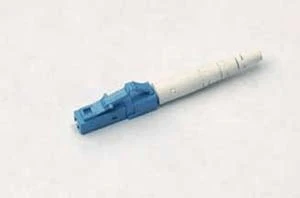
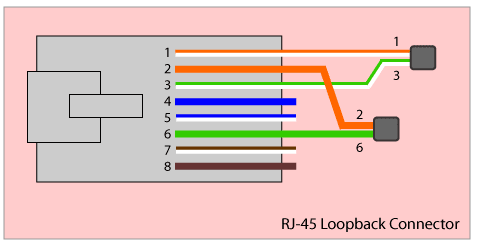
Loopback connectors are used in testing transceiver systems. Loopback describes a way of routing electronic signals from their originating facility to the receiving end of the source without processing or modification. This is best used as a way to test the transmission of transportation infrastructure.
MTP, the abbreviation for Multi-Fiber Push On/Pull Off, connectors are a threaded type of fiber optic connector. They are ideal for high-density applications. MTP connectors is the commercial name for MT connectors, which are 12 fiber connectors for rubber cable. It is used for pre-terminated cable assemblies and cabling systems.

The MT-RJ uses a ferrule smaller than the standard MT to hold two fibers. MT stands for Mechanical Transfer and RJ stands for Register Jack. It also uses a press to release latch quite similar to that found on the modular jack to make its operation familiar. MT-RJs use pins for alignment and have male and female versions. They are multimode only, and are field terminated by prepolished/splice method.
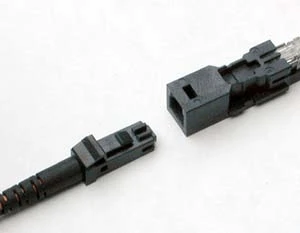
An MU connector is a 1.25 mm diameter ferrule for compact multiple optical connectors and self-retentive mechanism for backplane applications. These "miniature units" are utilized in high-speed data communications, voice networks, telecommunications and high-density DWDM applications. MU connectors are more popular in Japan.
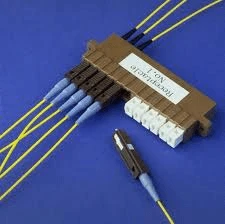
SCs, or Subscriber Connectors, are high-precision ceramic ferrules. They feature a snap-in locking mechanism for positive latching. SC connectors use a push-pull design and can be used for simplex or multiplex applications. They have a keyed body for repeatability and intermateability and are ideal for high-density applications. SCs are referred to as premises connectors since they are used for premises installations. Although it has a compact hard plastic design, they do not have the smallest footprint, requiring 0.378 square inches.

SMA connectors have a low cost multimode coupling with approval for military applications. SMA, which stands for Subminiature A, is a microwave connector.

ST, or Straight Tip, connectors are composed of a precise zirconia ceramic ferrule. They have an easy-to-assemble, one-piece bayonet mounting system. They can be used for both single mode and multimode fibers. This type of connector is very popular in communication applications, such as LANs and CCTV systems. ST connectors are also referred to as a BFOC (Bayonet Fiber Optical Connector). They have a ceramic tip that extends past the connector body. This is also known as a simplex bayonet-style twist-lock connector and it requires special care since the ferrule is unprotected. While the ST connector is still popular in many industrial applications, it is losing favor to more compact, keyable form factors.

Hot Tags: china lc lc duplex fiber optic adapter, China china lc lc duplex fiber optic adapter manufacturers, suppliers, factory, fiber optic mt rj adapter, optical fiber jack plug adapter, fiber optic simplex adapter, fiber optic long lasting adapter, fiber optic hybrid adapter, fiber optic coupler adapter


